


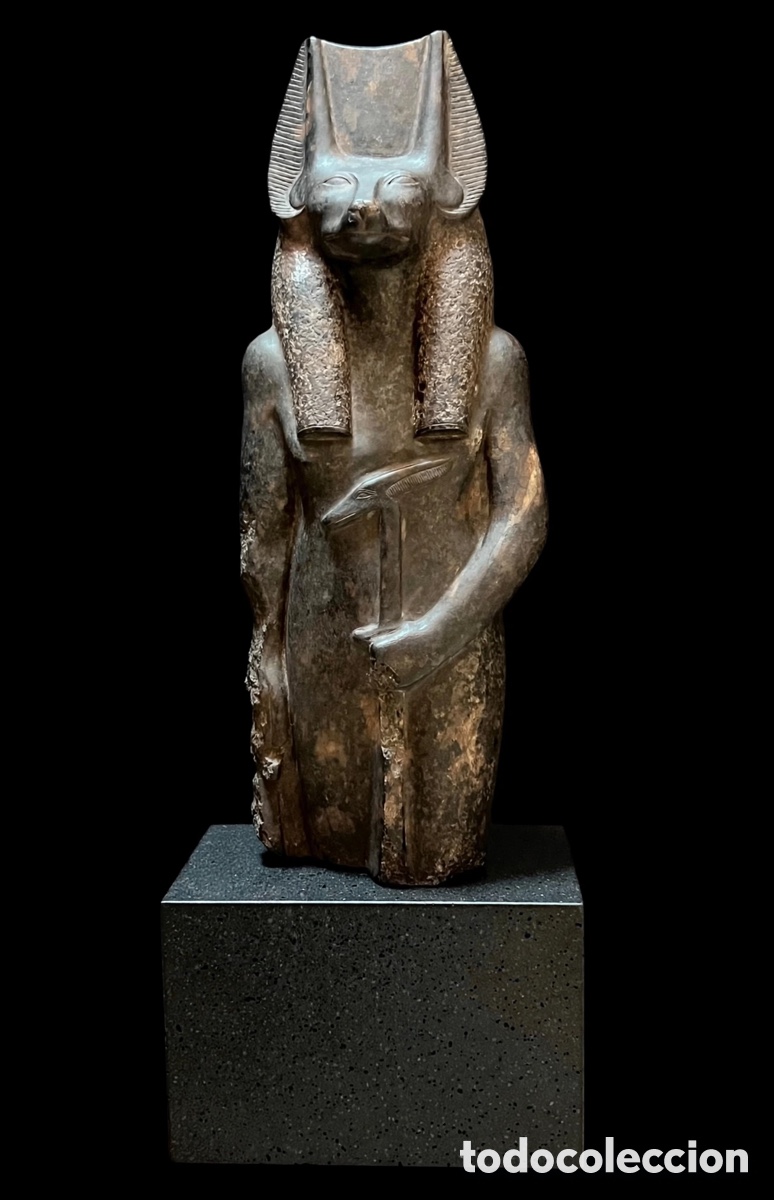
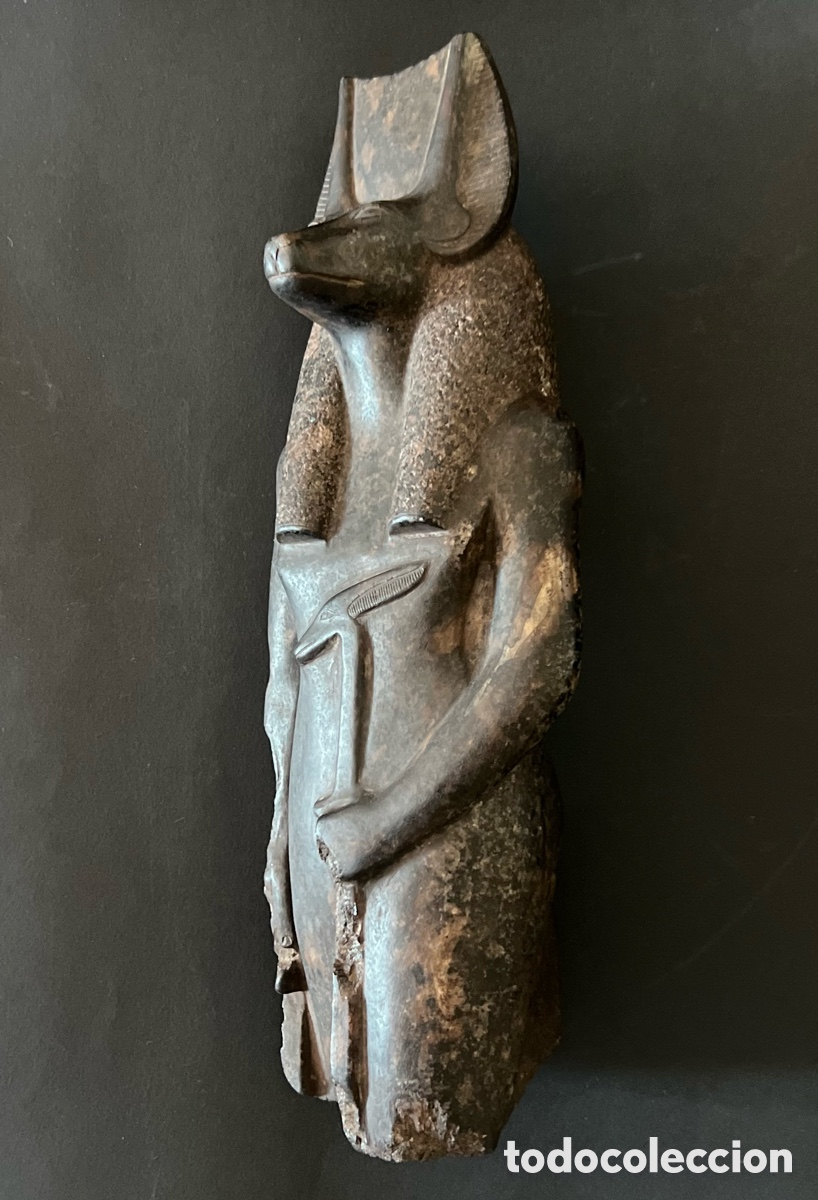
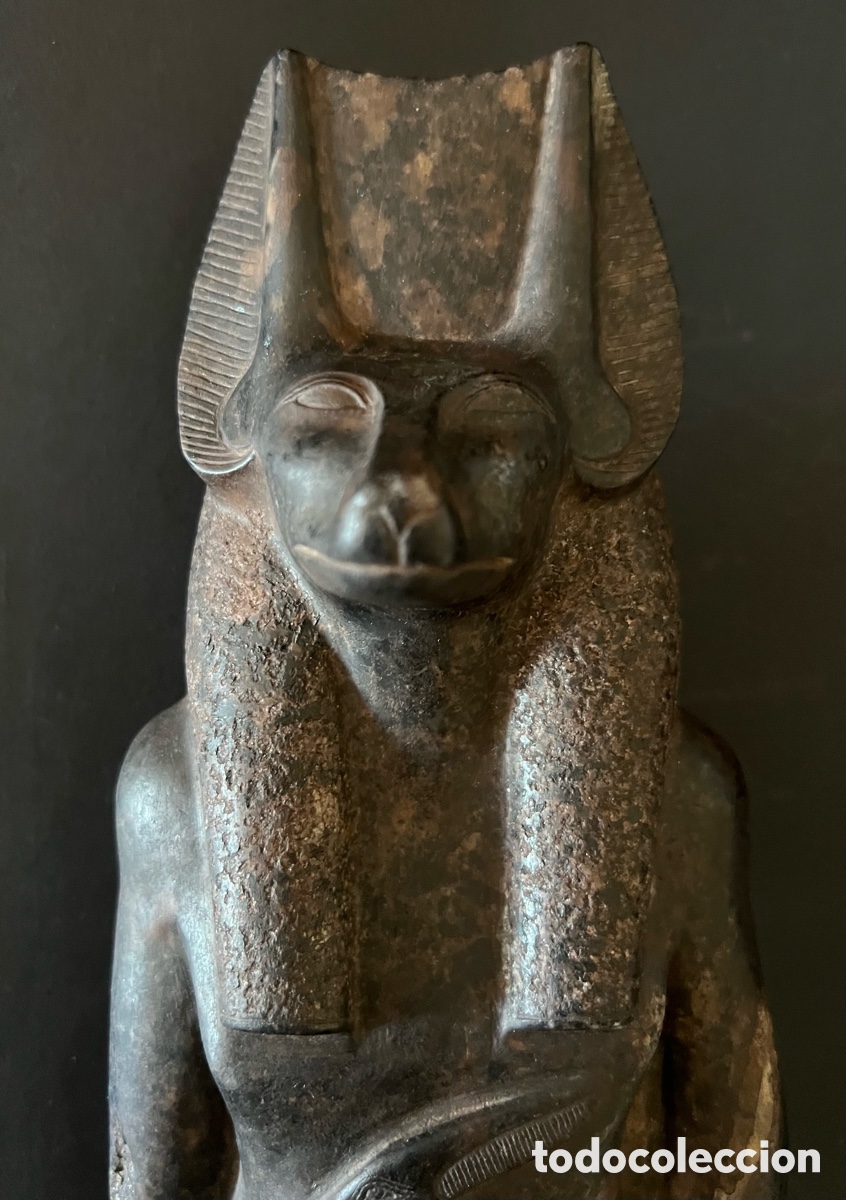
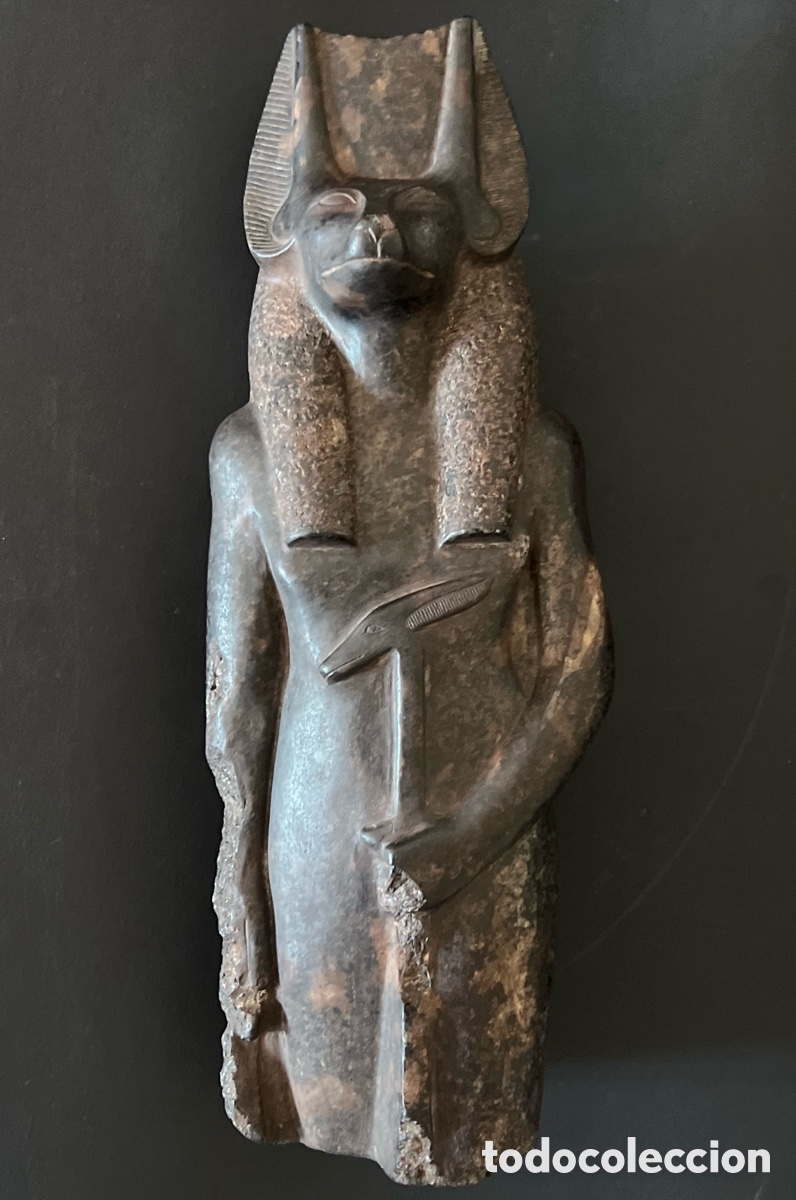
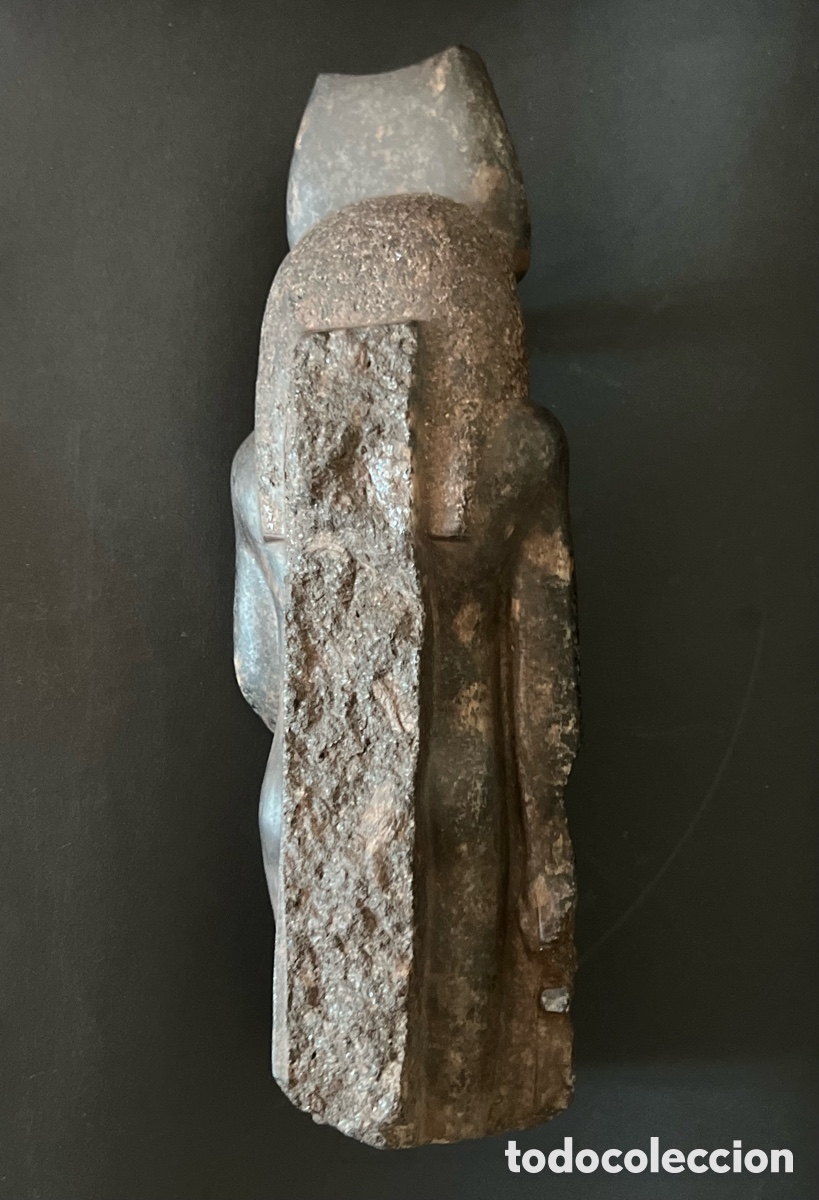
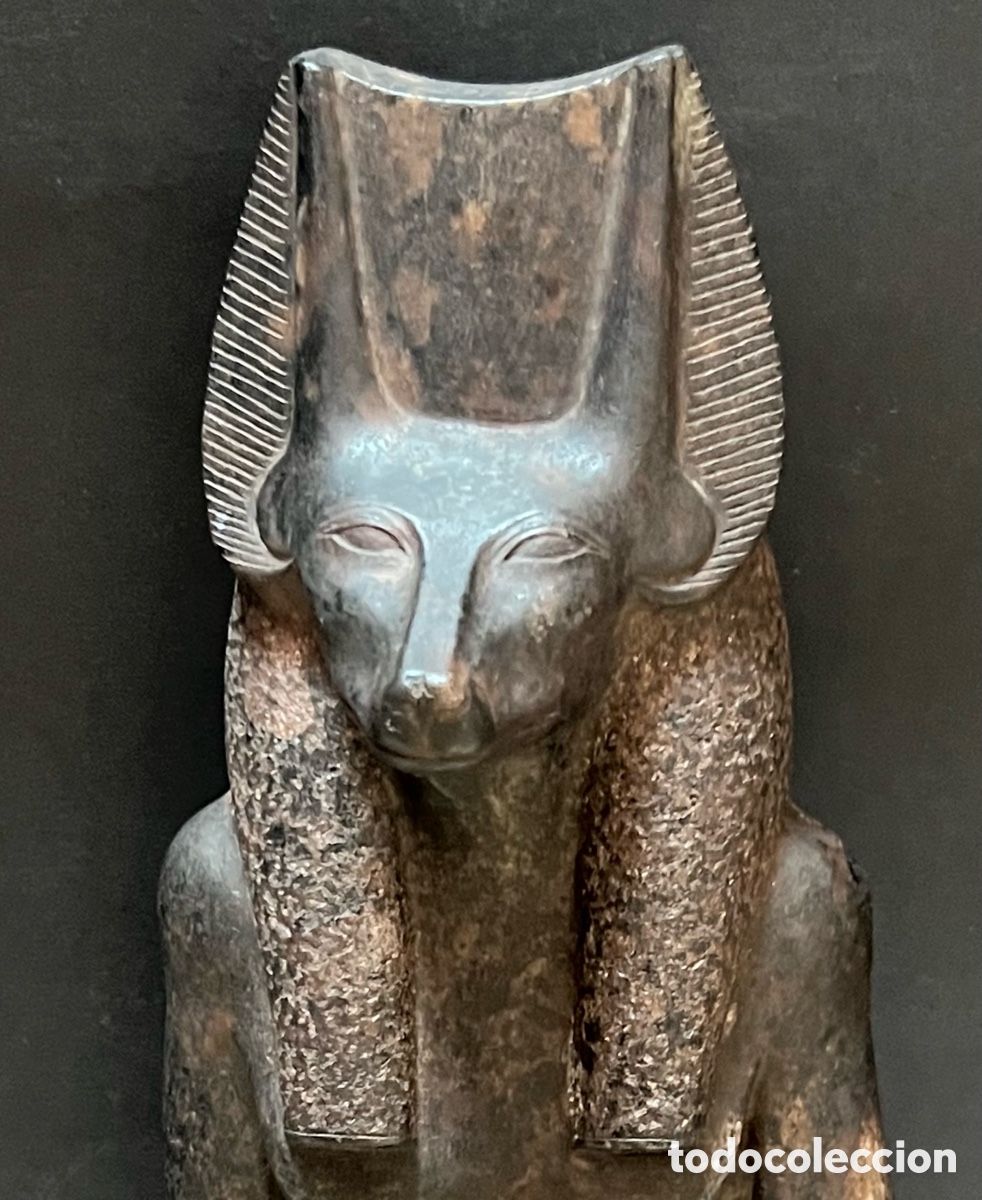
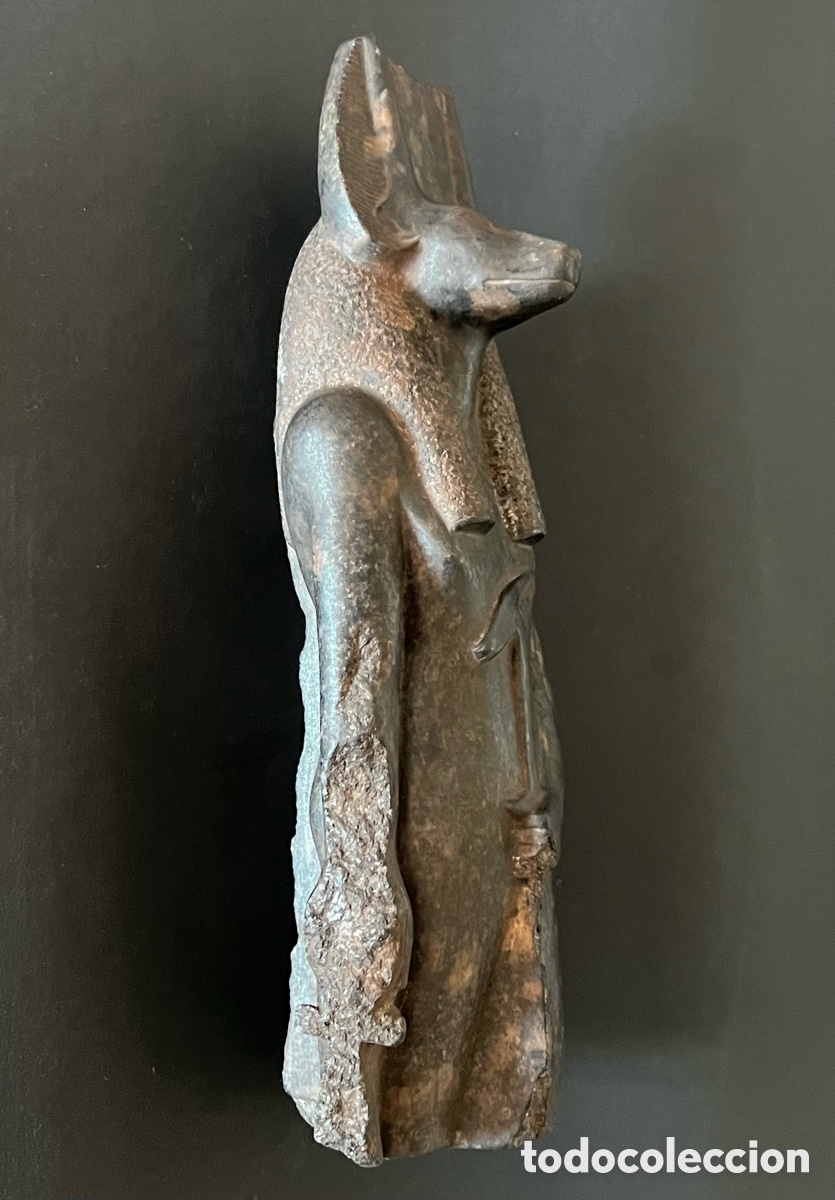
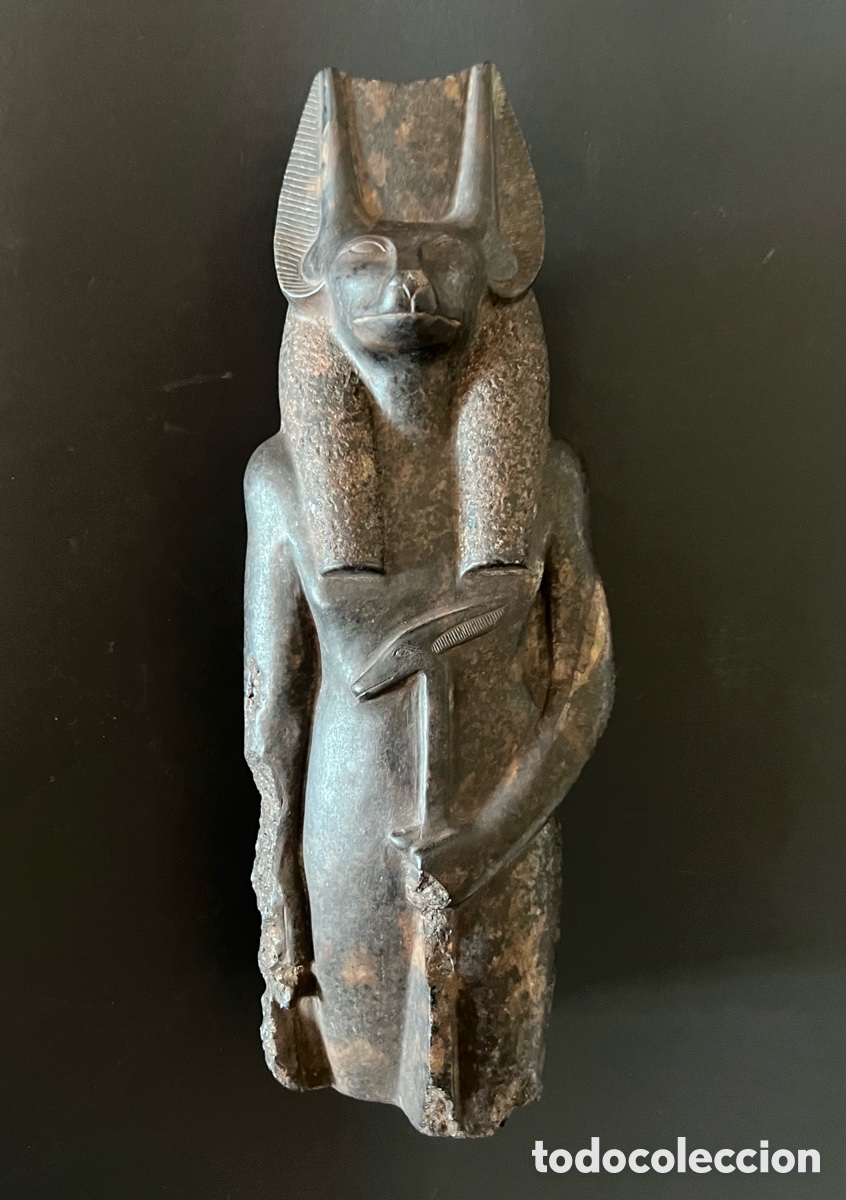
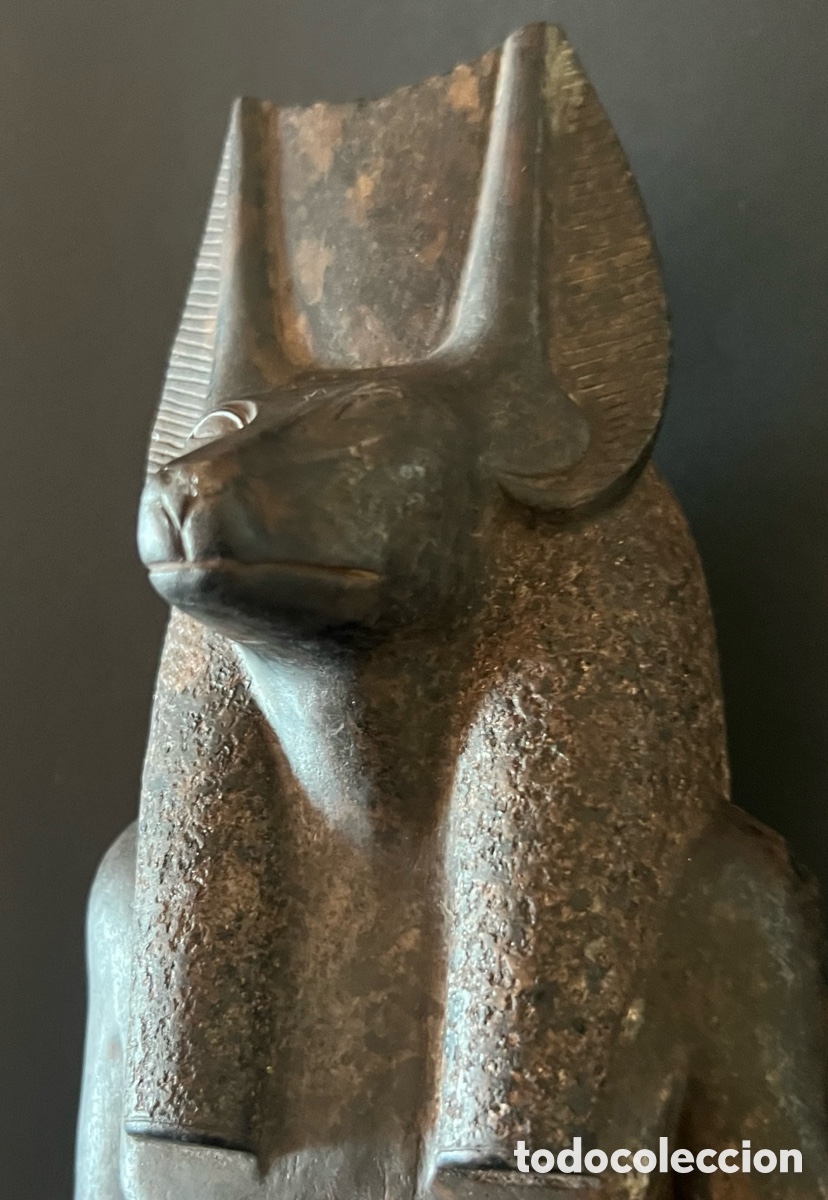
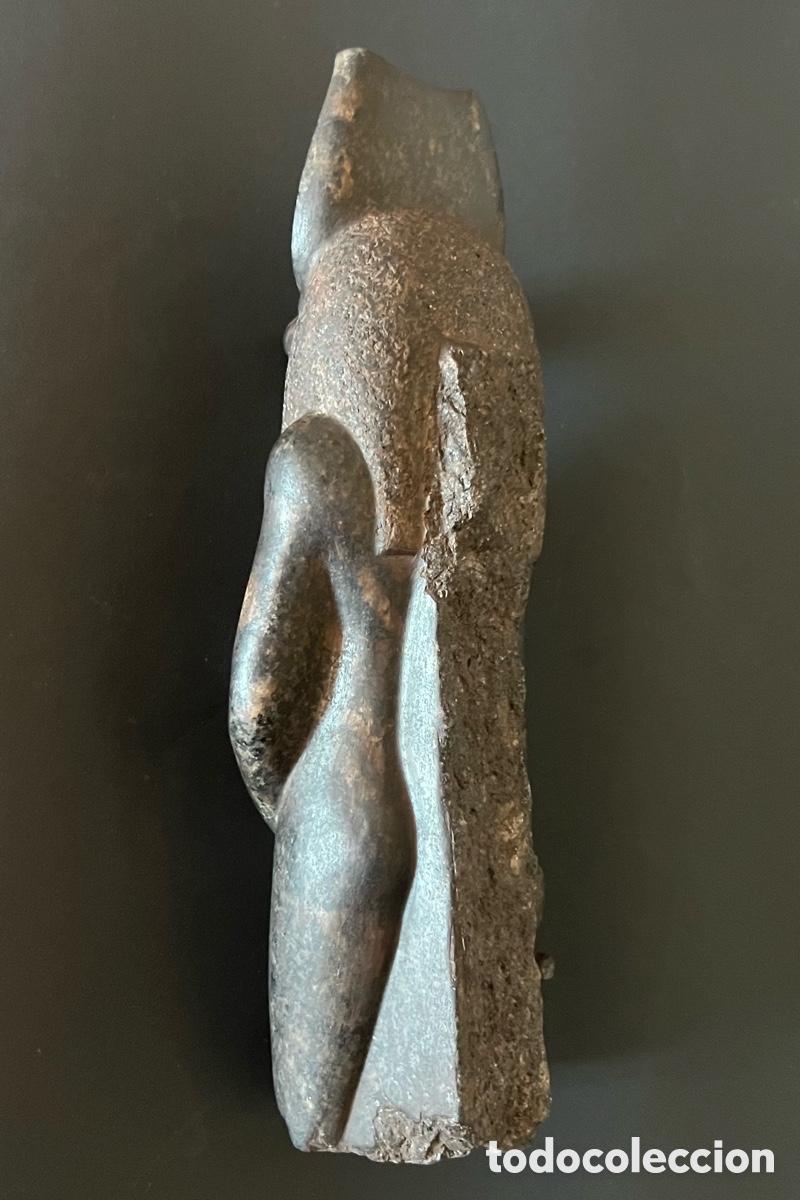
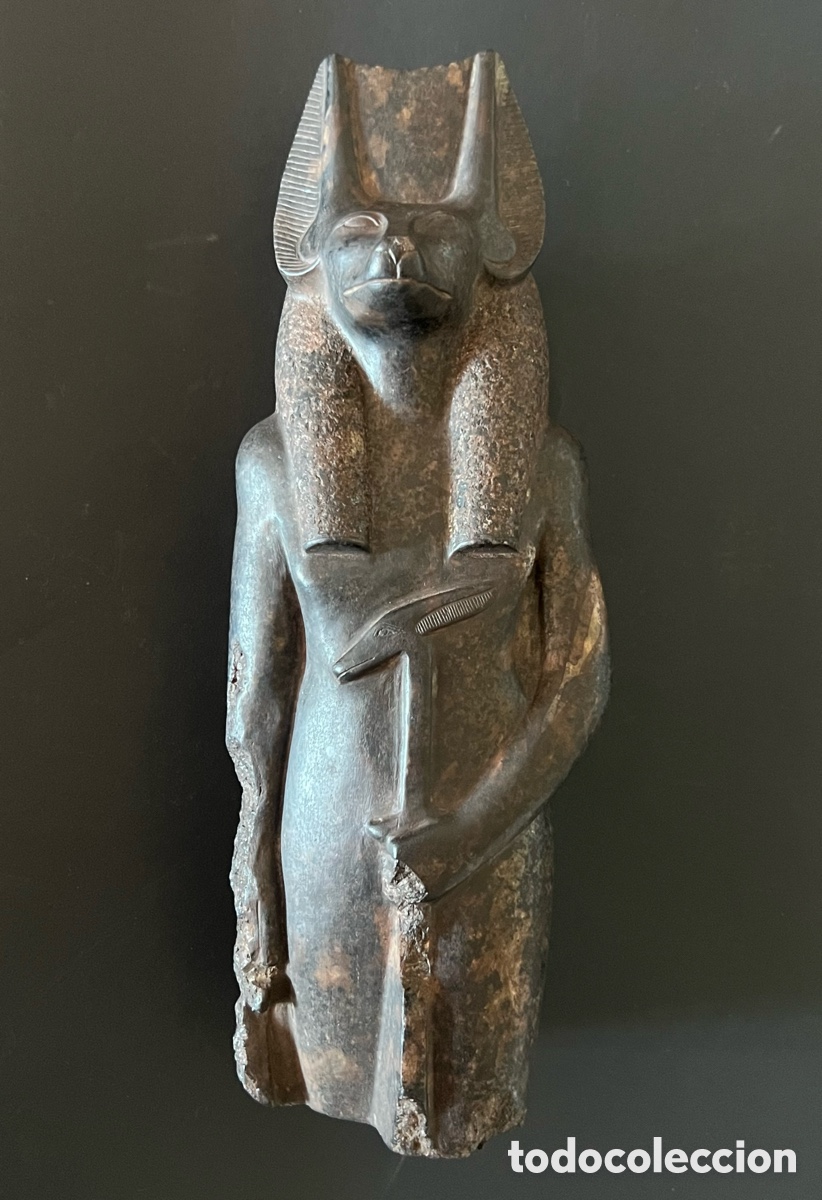
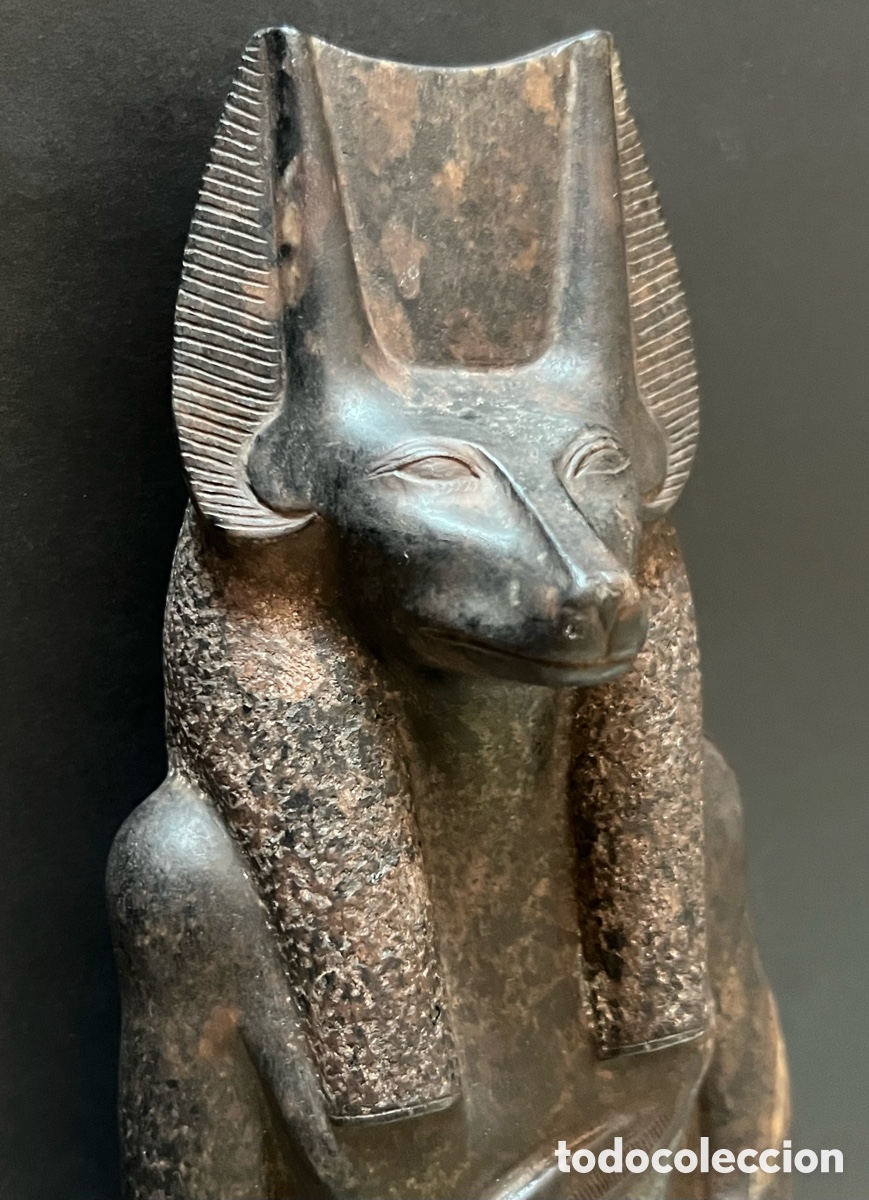
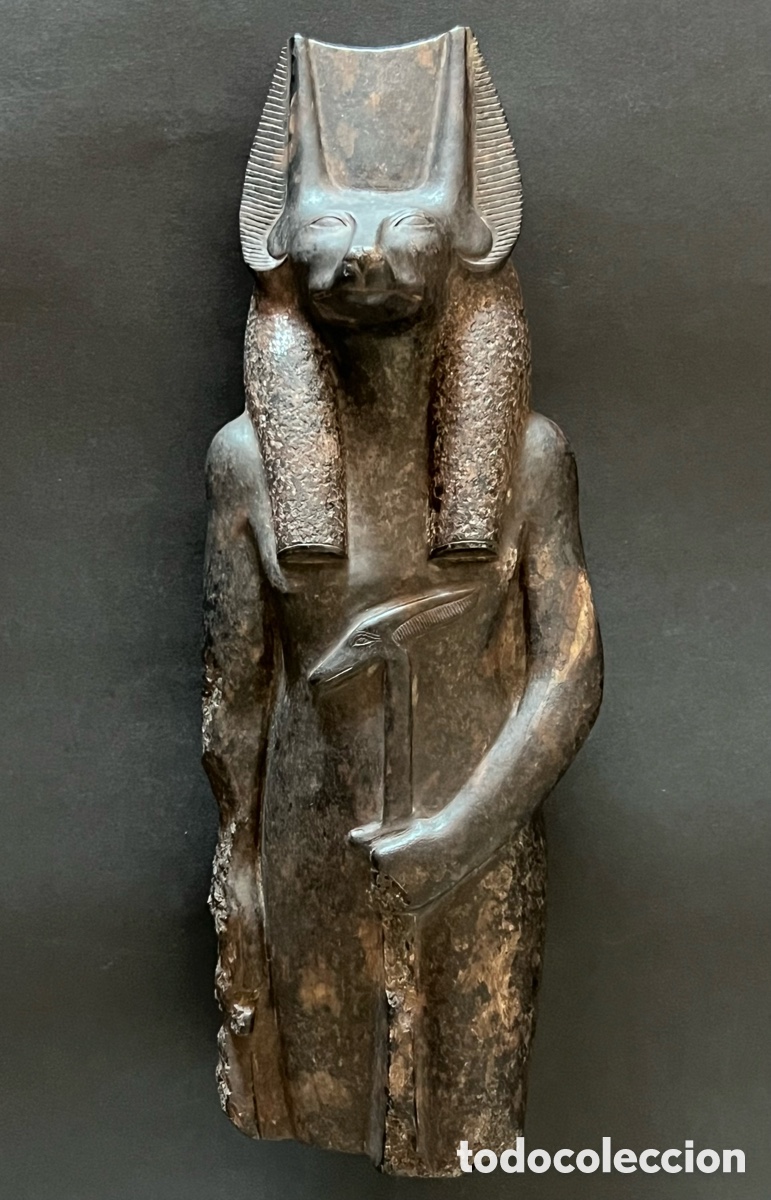
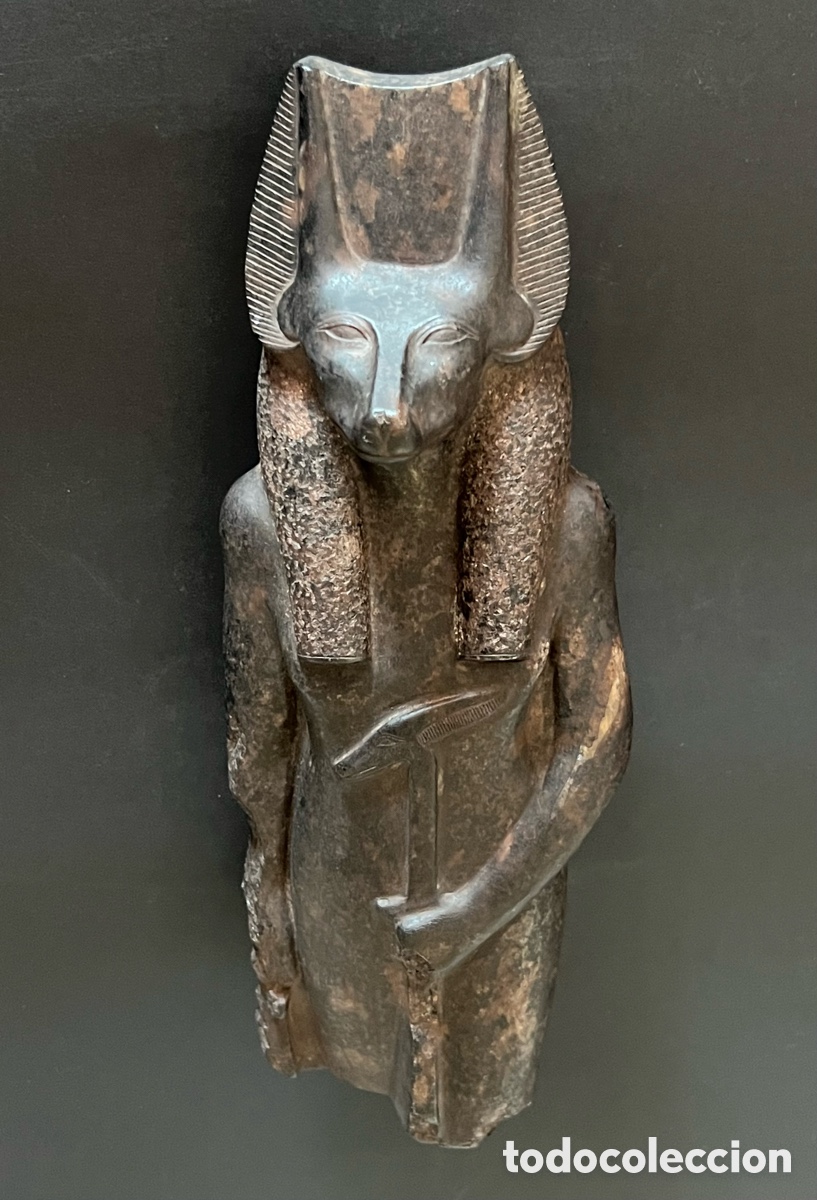
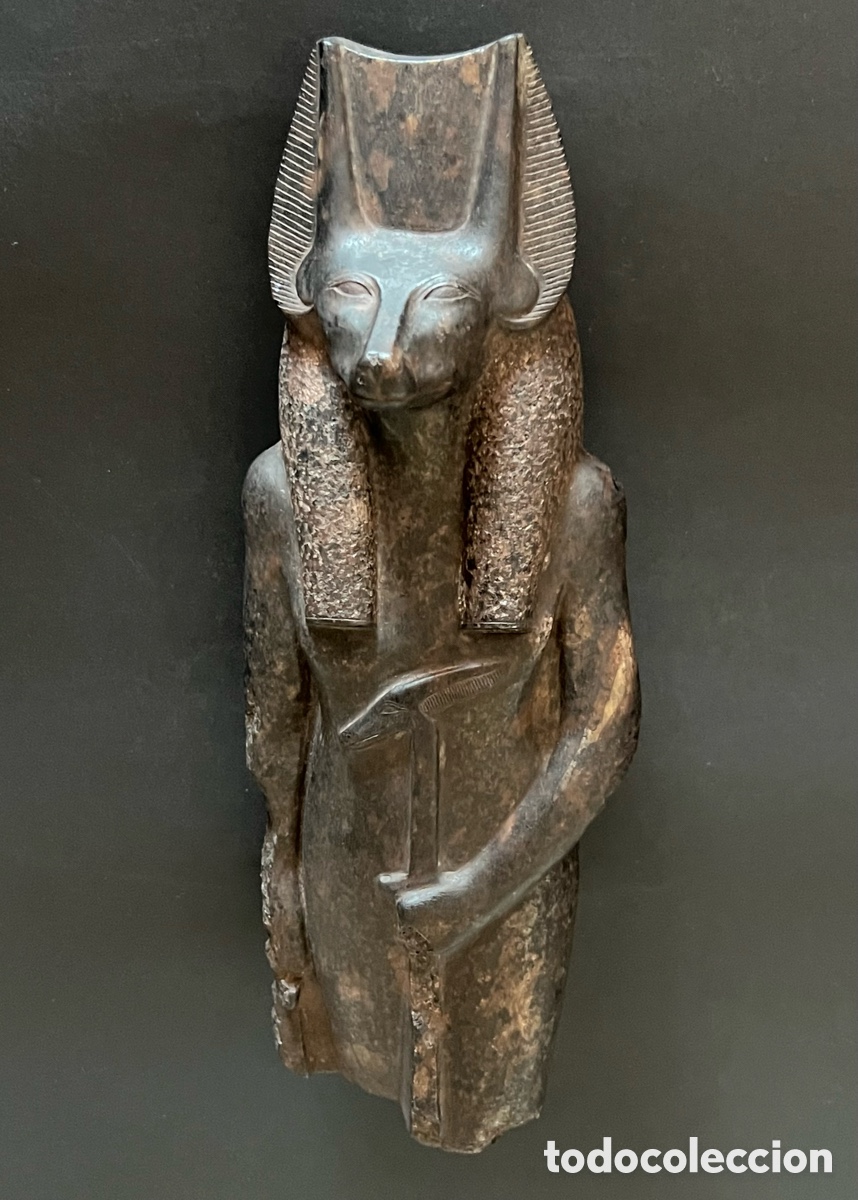
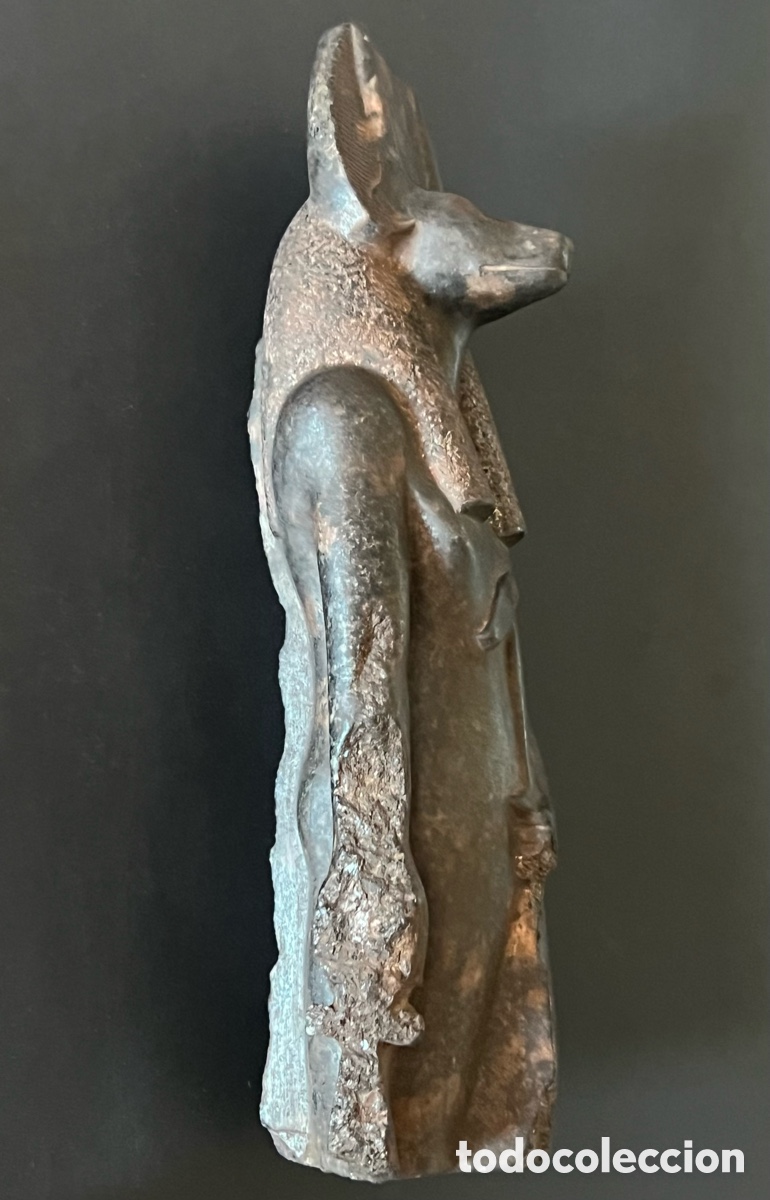
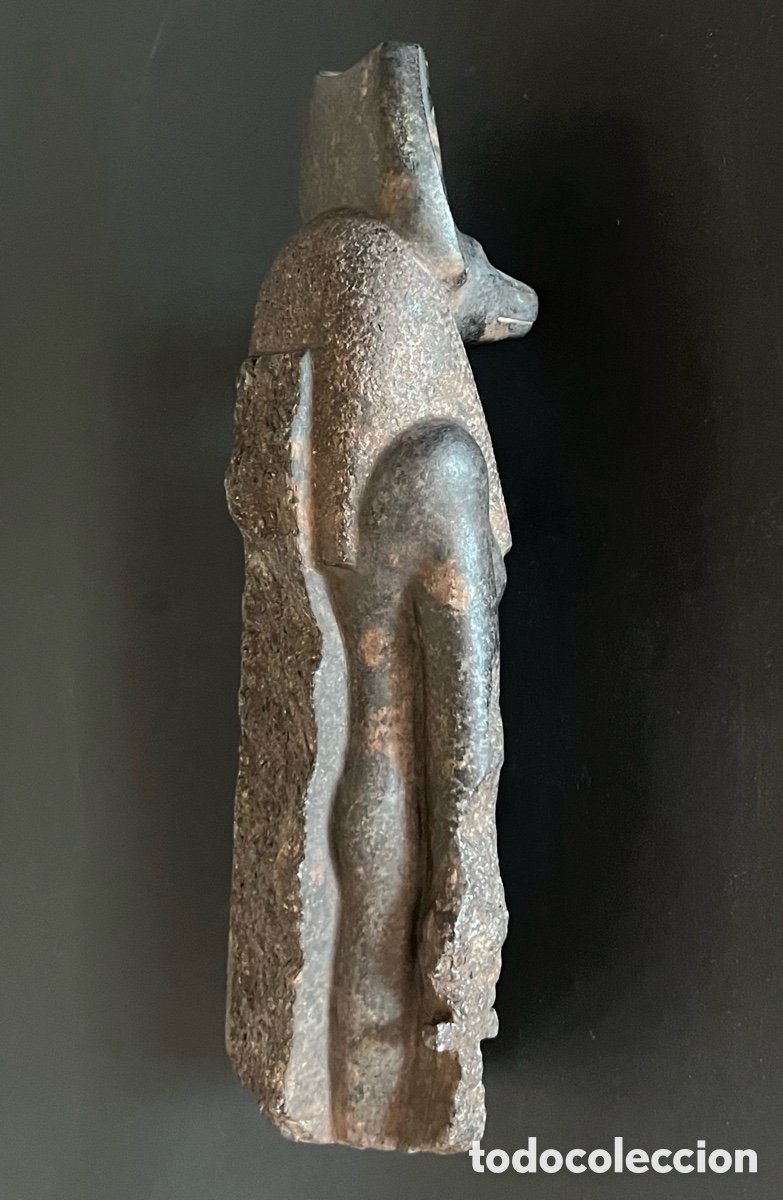
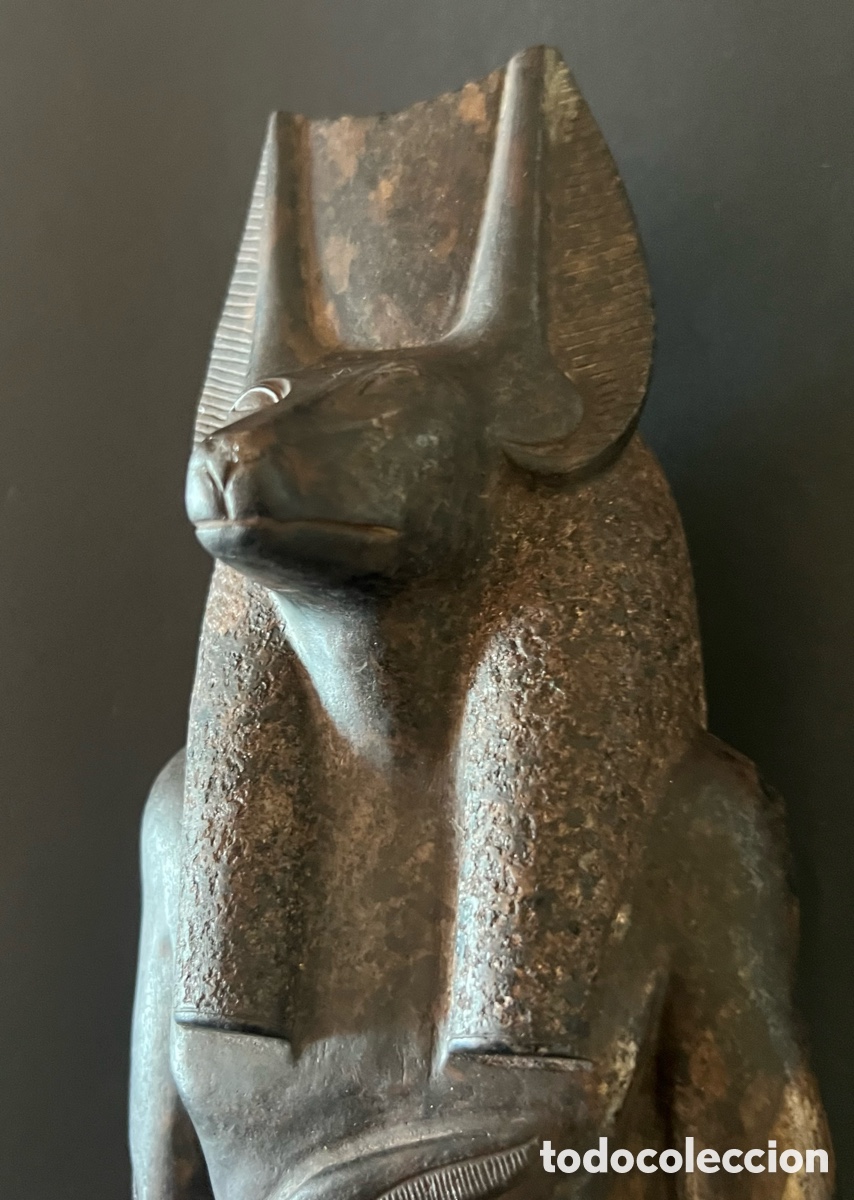
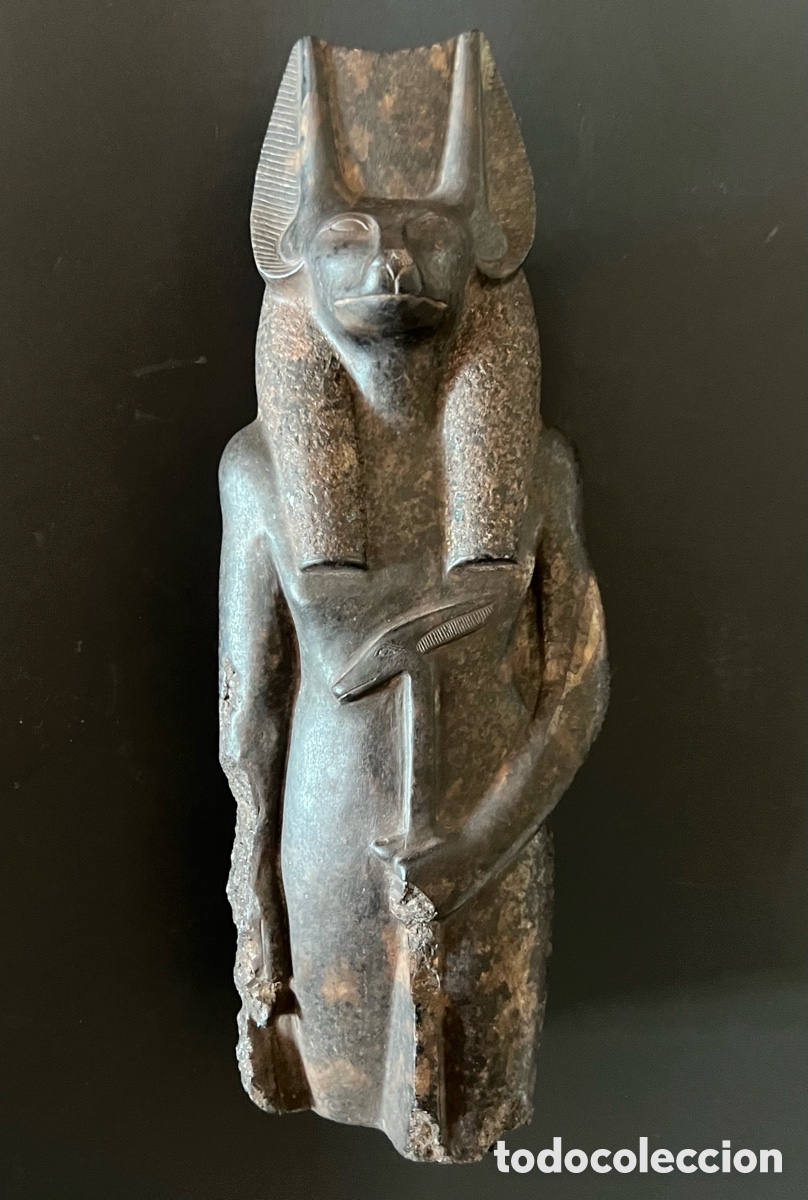
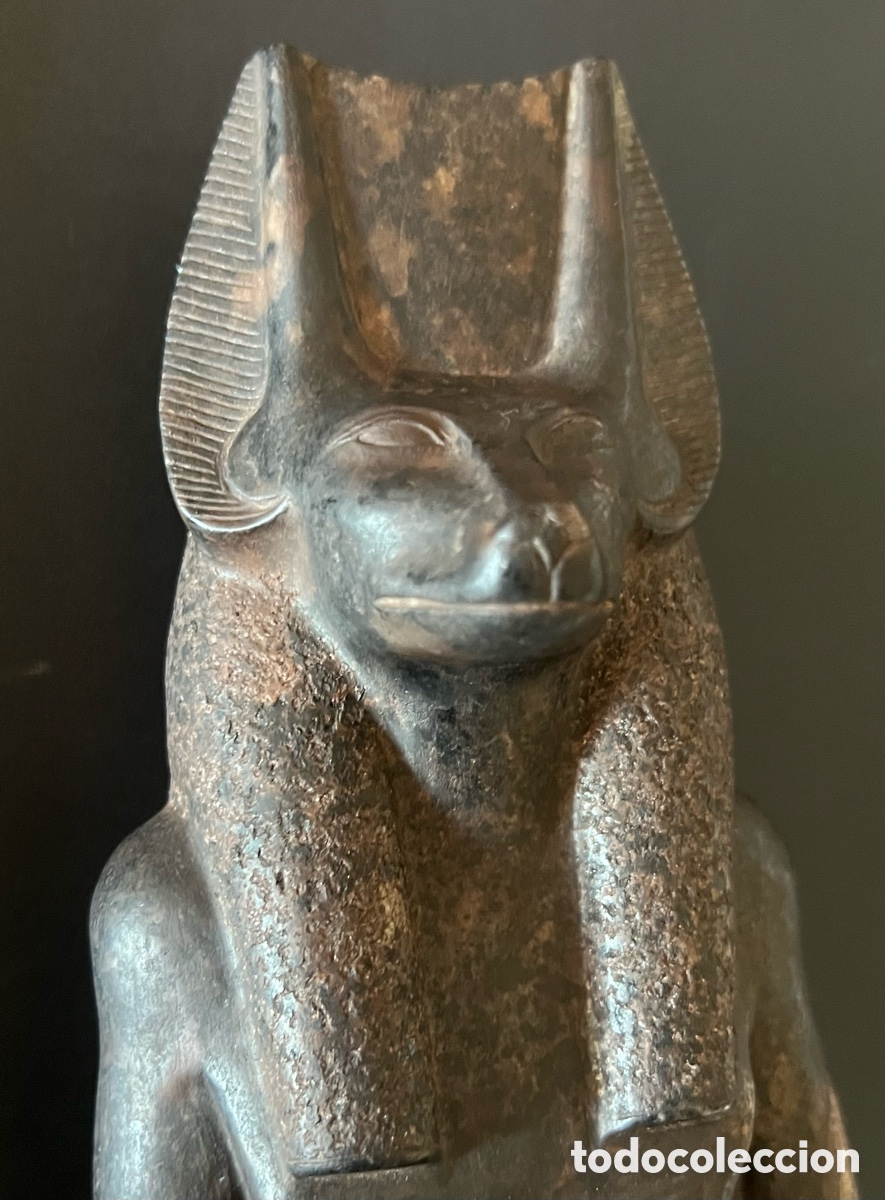
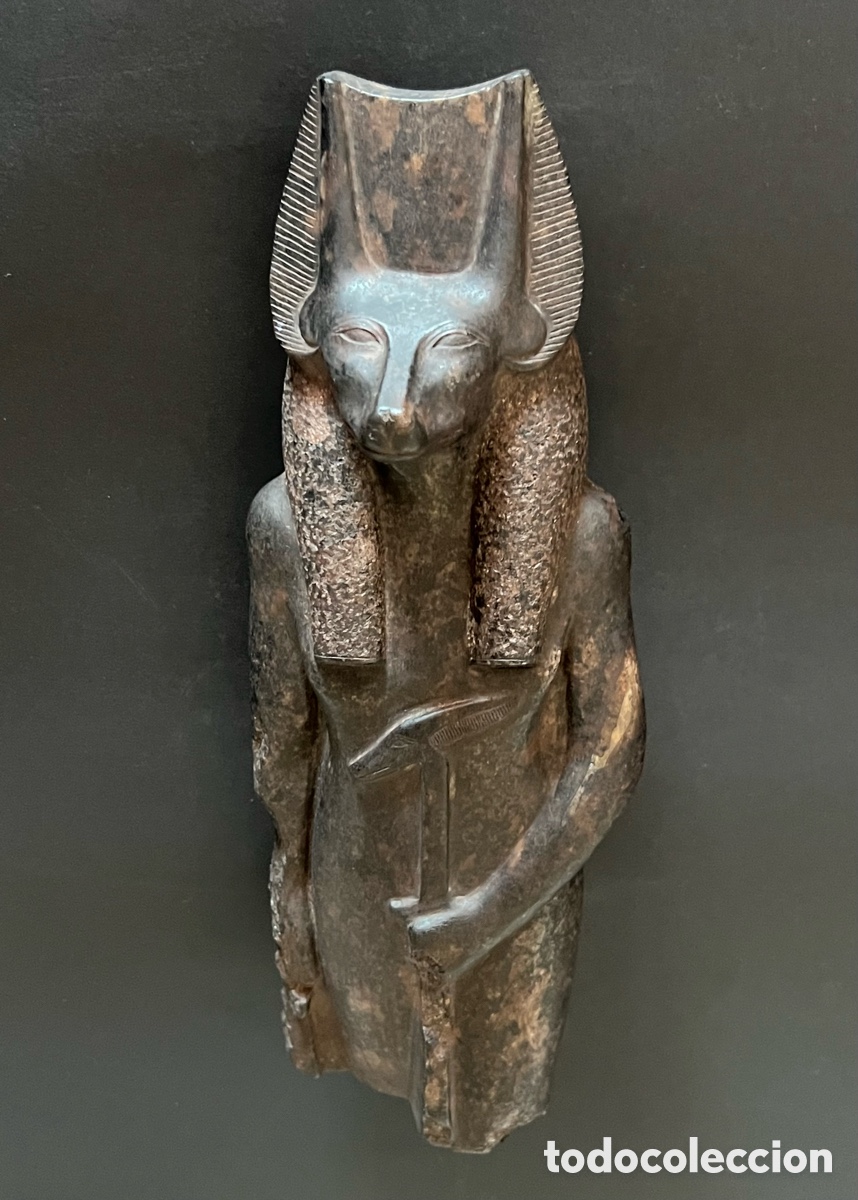
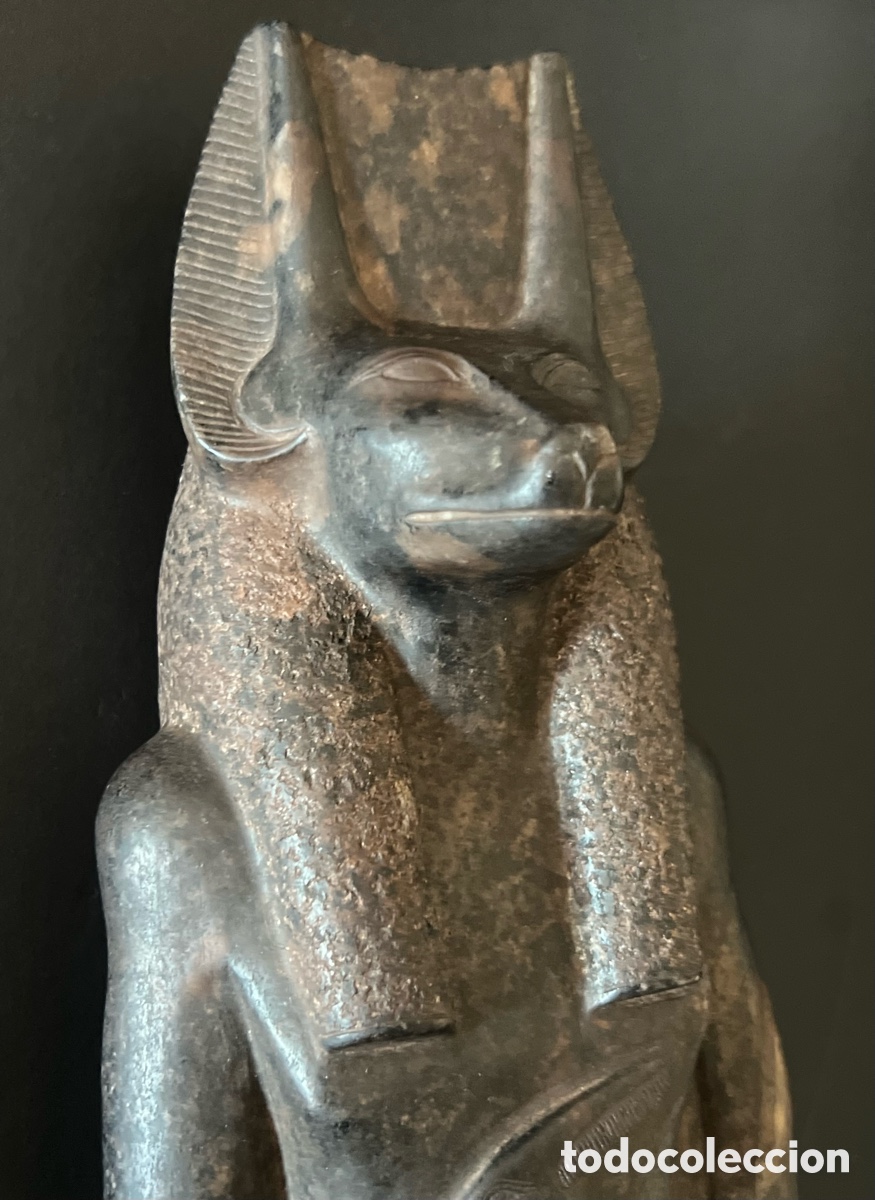
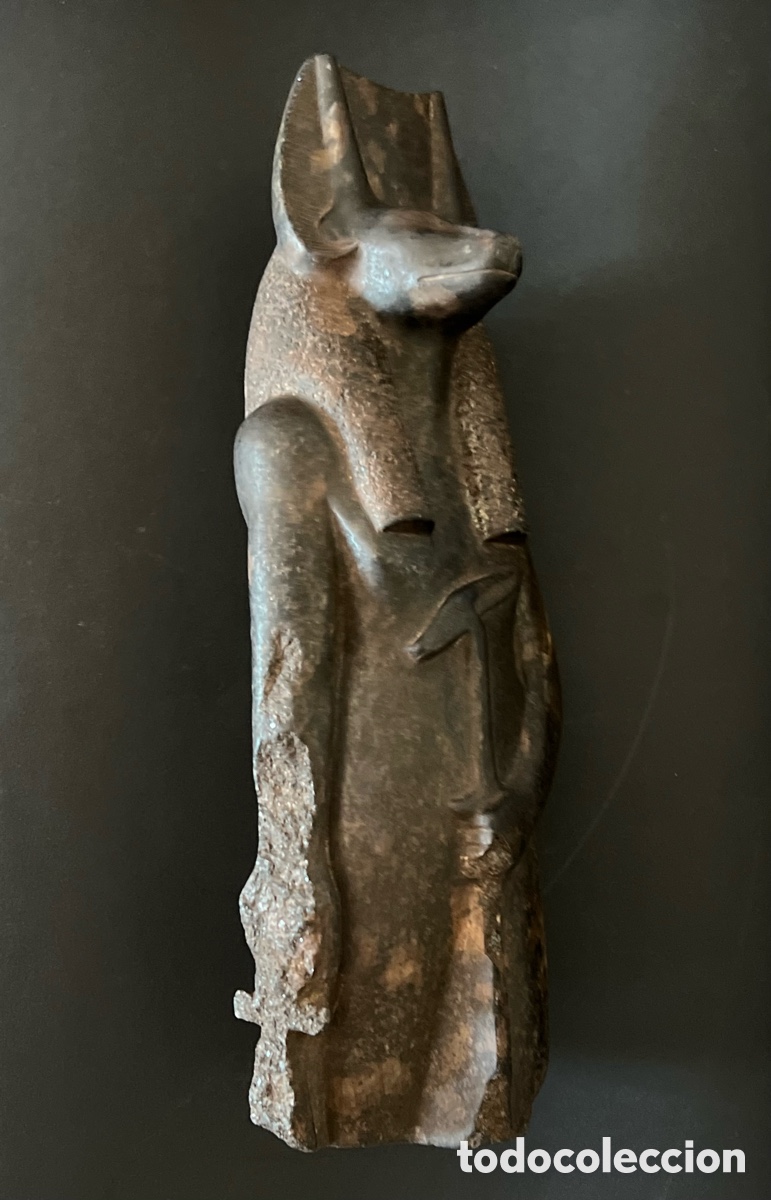
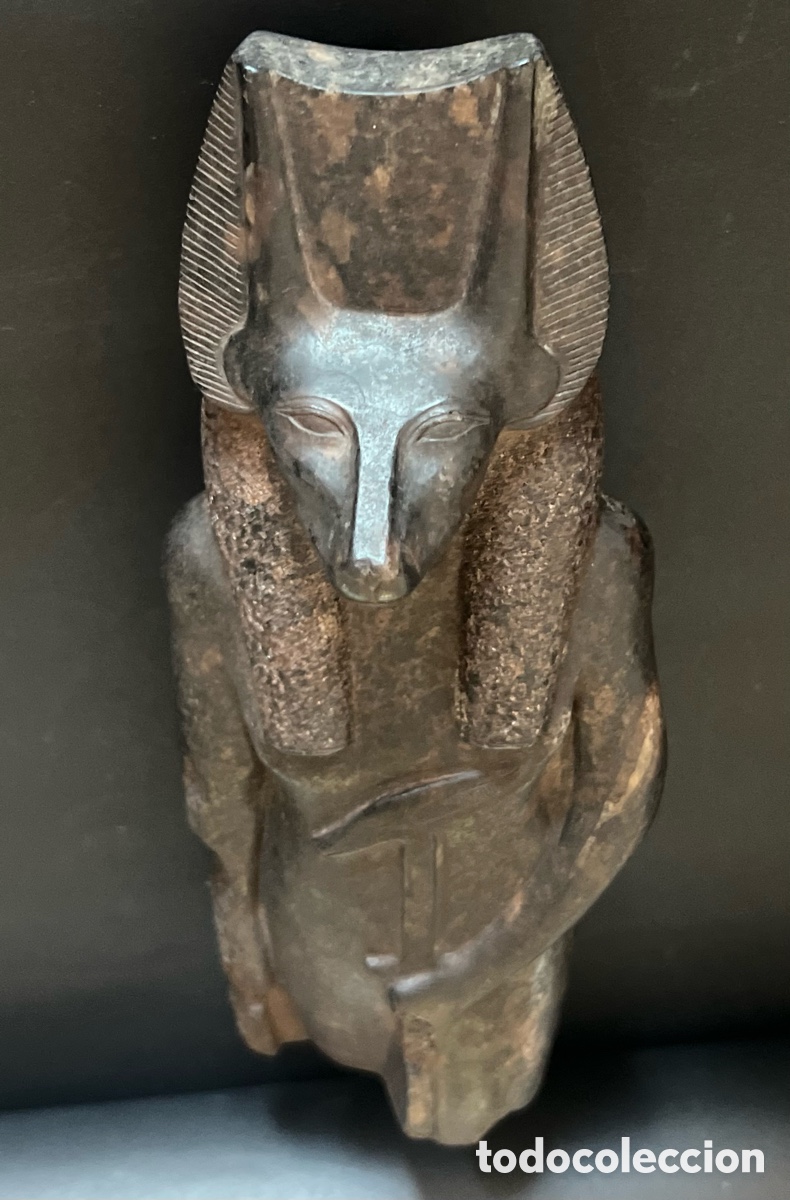
Estatua de Anubis
Medium: granito negro
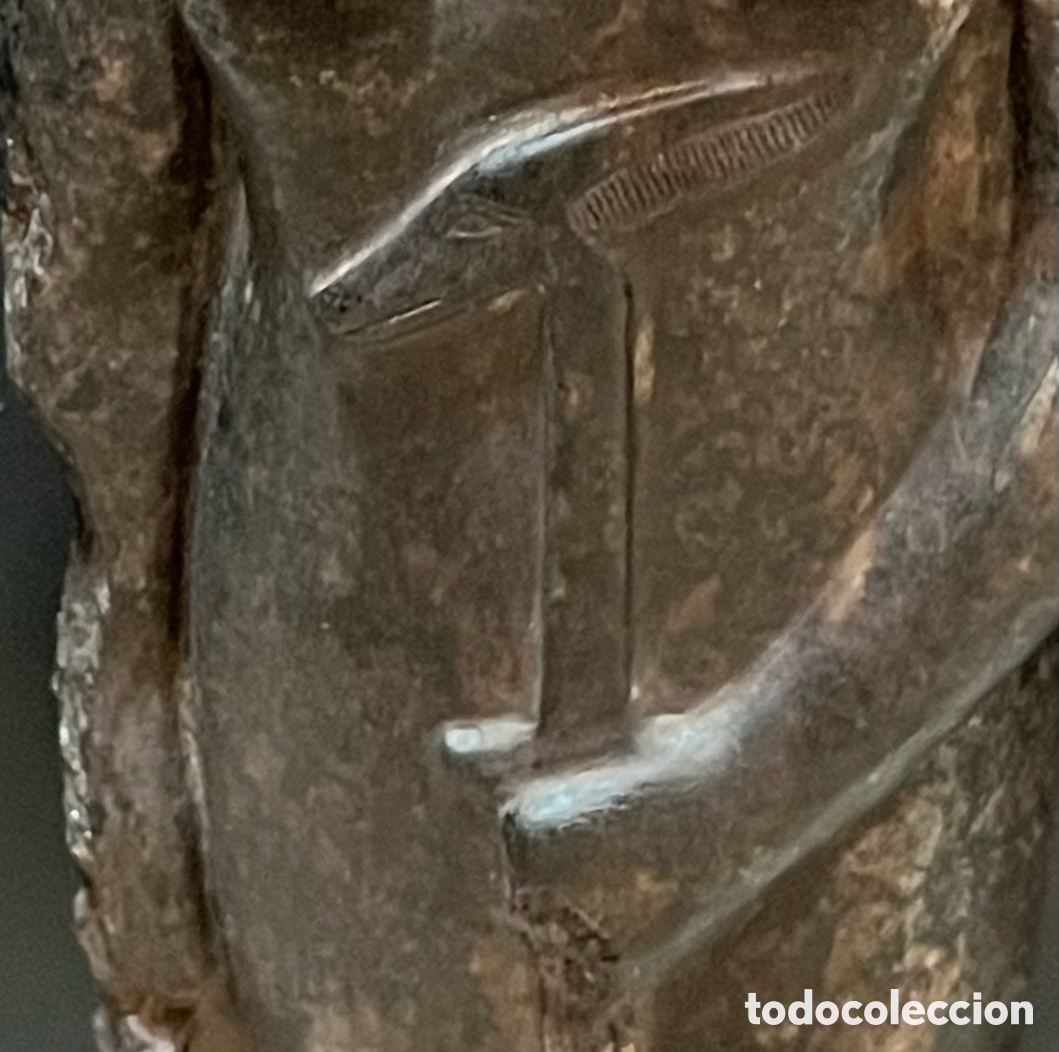
Porta el Cetro Was en su mano izquierda y el Ankh en su mano derecha
Medidas: 30cm. de alto
Peso: 3 Kg.
Colección Privada
Anubis, conocido en egipcio antiguo como Inpu o Anpu, es una de las deidades más antiguas del panteón egipcio, con culto desde el Período Predinástico (aproximadamente 4000 - 3100 a.C.),. Su iconografía clásica lo muestra con cabeza de chacal negro y cuerpo humano, reflejando su vínculo con los cementerios y necrópolis, donde los chacales merodeaban en busca de cadáveres. Esta representación simboliza su papel como protector de las tumbas y guía de los muertos.
El culto a Anubis se extendió por todo Egipto durante más de tres mil años, desde el Antiguo Reino hasta la conquista romana. Aunque posteriormente Osiris se convirtió en la figura central del inframundo, Anubis mantuvo su relevancia como patrón de embalsamadores y guardián de tumbas. Su presencia era esencial en rituales funerarios, amuletos, frescos y sarcófagos, asegurando la supervivencia del alma en la otra vida.
Porta un bastón largo coronado por una cabeza de animal estilizada y terminado en una horquilla: El cetro Was, uno de los emblemas más reconocibles del Antiguo Egipto y uno de los pocos objetos de la cultura faraónica que condensa, en un único instrumento, el poder terrenal del faraón, la autoridad divina de los dioses y la capacidad de controlar el caos que amenaza constantemente el orden del mundo.
En su mano derecha porta el Ankh, símbolo egipcio antiguo que representa la vida, la inmortalidad y el poder divino, conocido como "la llave de la vida" o "cruz ansada".
El Ankh se originó en el Antiguo Egipto, con registros que datan del Periodo Dinástico Arcaico (c. 3150-2613 a.C.) y se popularizó durante el Imperio Medio (c. 2050-1710 a.C.),Dentro del sistema de jeroglíficos egipcios, representa las consonantes Ꜥ-n-ḫ y significa literalmente "vida" o "soplo de vida".
Statue of Anubis
Medium: Black granite
He holds the Was Scepter in his left hand and the Ankh in his right.
Measurements: 30 cm tall
Weight: 3 kg
Private Collection
Anubis, known in ancient Egyptian as Inpu or Anpu, is one of the oldest deities in the Egyptian pantheon, worshipped since the Predynastic Period (approximately 4000–3100 BCE). His classic iconography depicts him with the head of a black jackal and a human body, reflecting his connection to cemeteries and necropolises, where jackals roamed in search of corpses. This representation symbolizes his role as protector of tombs and guide of the dead.
The cult of Anubis spread throughout Egypt for over three thousand years, from the Old Kingdom until the Roman conquest. Although Osiris later became the central figure of the underworld, Anubis maintained his relevance as patron of embalmers and guardian of tombs. His presence was essential in funerary rituals, amulets, frescoes, and sarcophagi, ensuring the soul's survival in the afterlife. He carries a long staff topped with a stylized animal head and ending in a fork: the Was scepter, one of the most recognizable emblems of Ancient Egypt and one of the few objects of Pharaonic culture that condenses, in a single instrument, the pharaoh's earthly power, the divine authority of the gods, and the ability to control the chaos that constantly threatens the order of the world. In his right hand, he carries the Ankh, an ancient Egyptian symbol representing life, immortality, and divine power, known as "the key of life" or "the looped cross."
The Ankh originated in Ancient Egypt, with records dating back to the Early Dynastic Period (c. 3150-2613 BC) and became popular during the Middle Kingdom (c. 2050-1710 BC). Within the Egyptian hieroglyphic system, it represents the consonants Ꜥ-n-ḫ and literally means "life" or "breath of life".

Spanien (Málaga)


 Español
 English
 Deutsch
 Français
 Português
 Italiano