


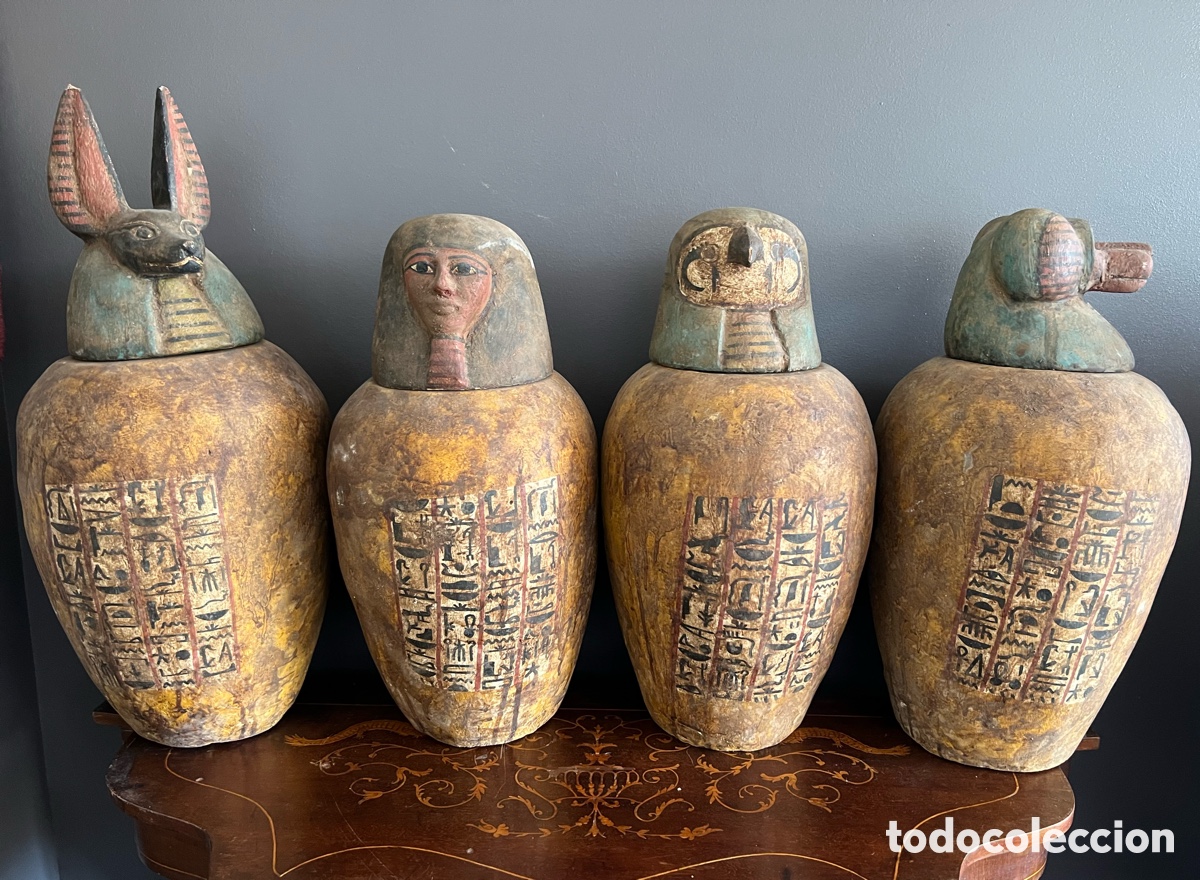
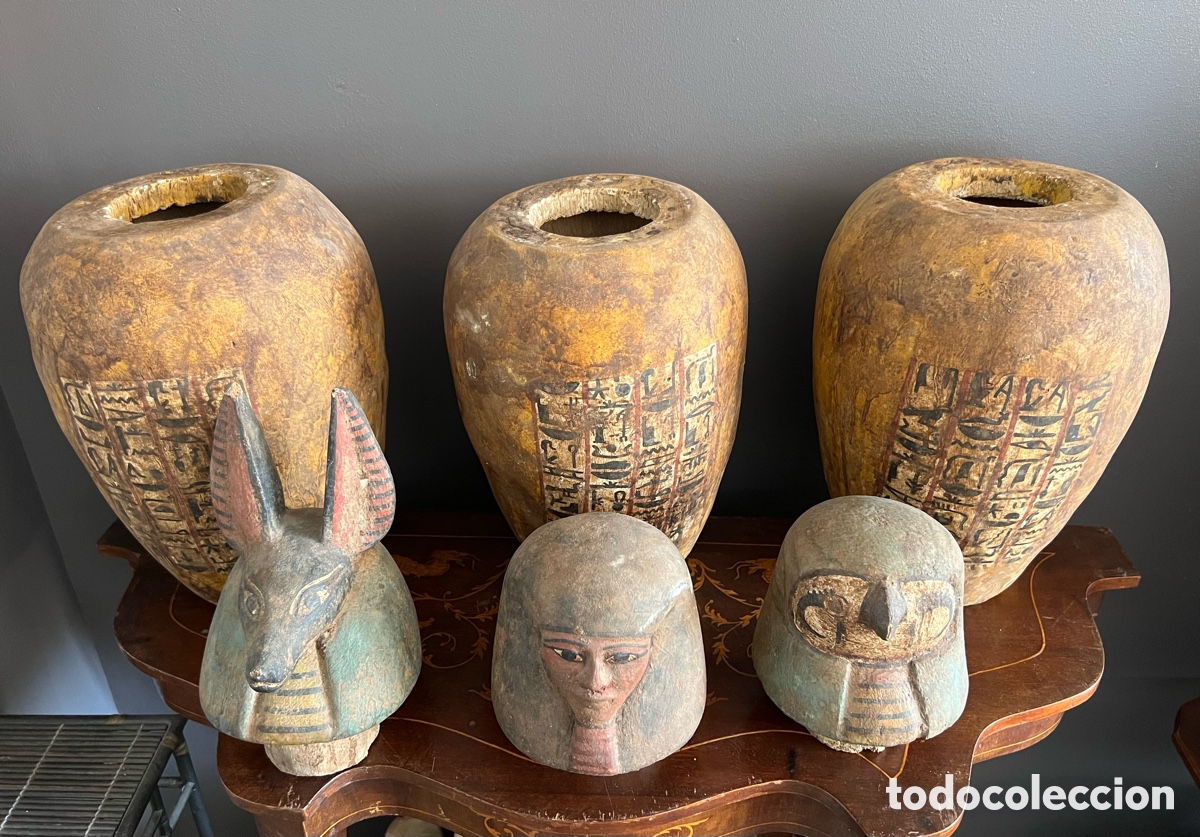
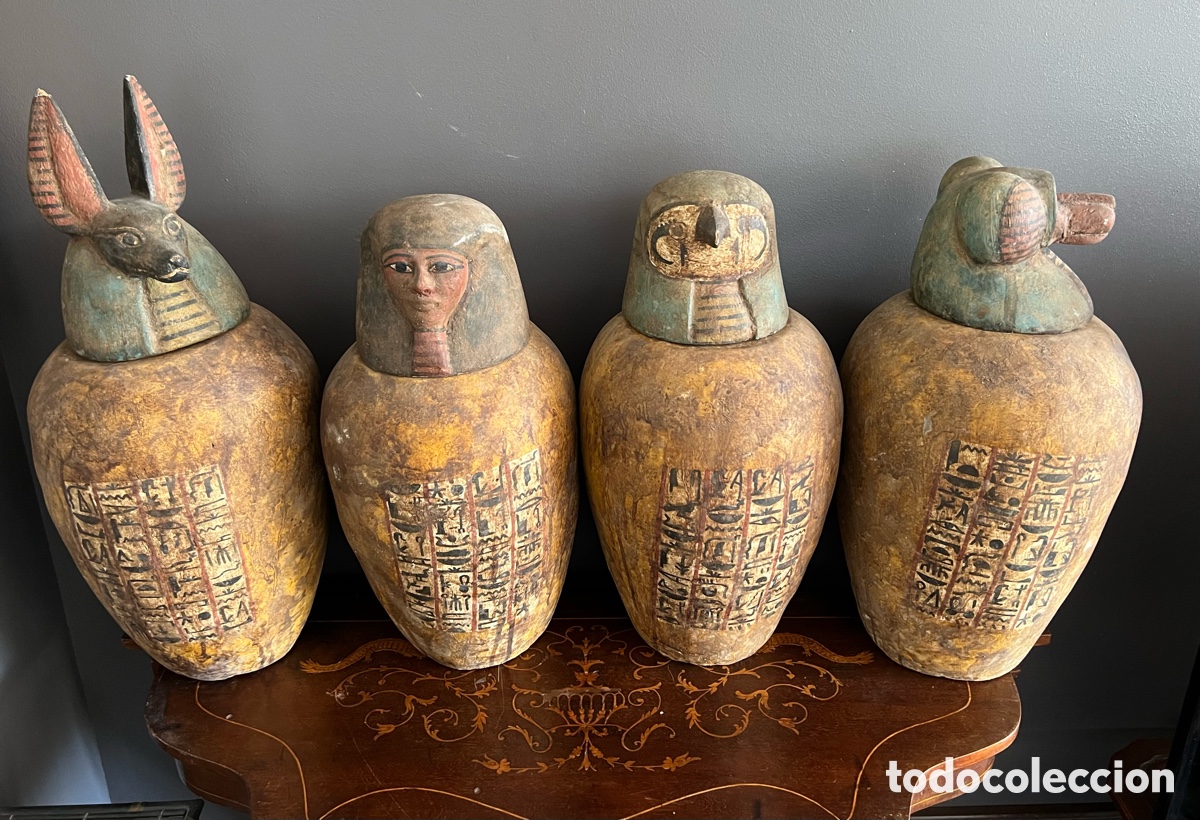
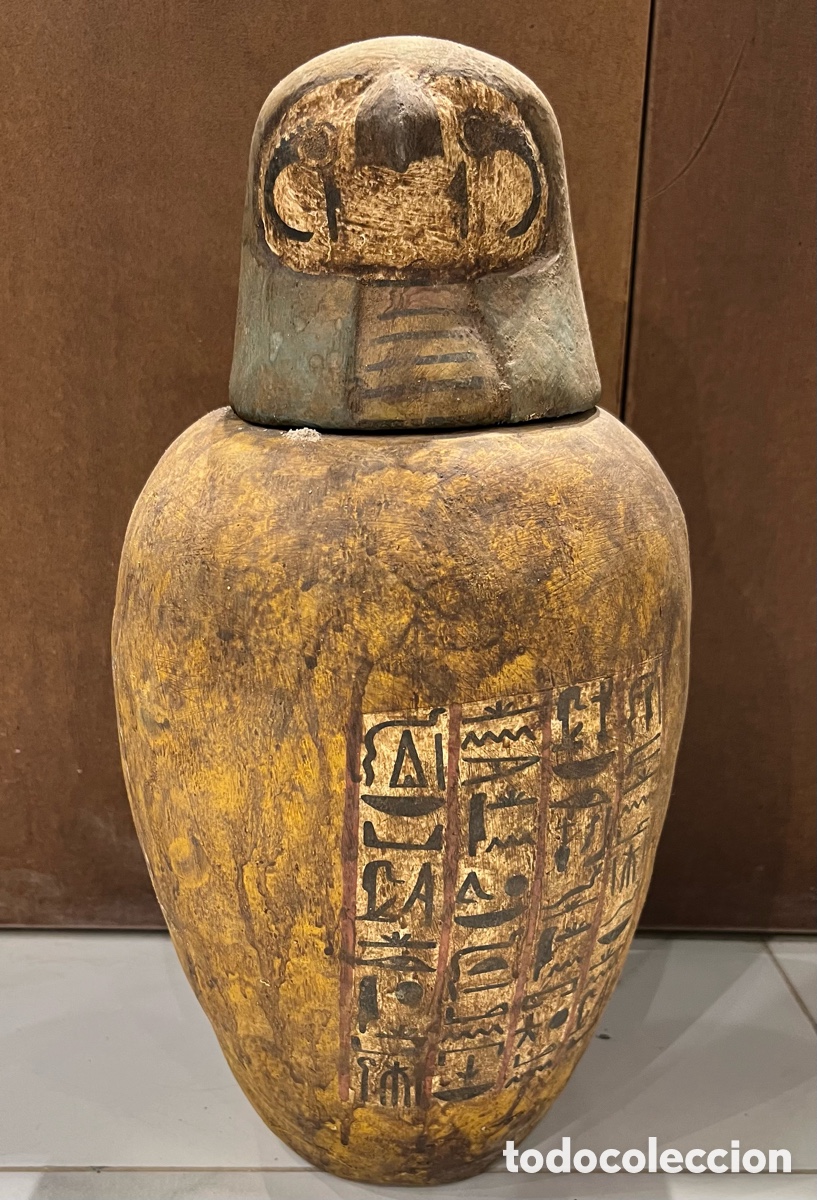
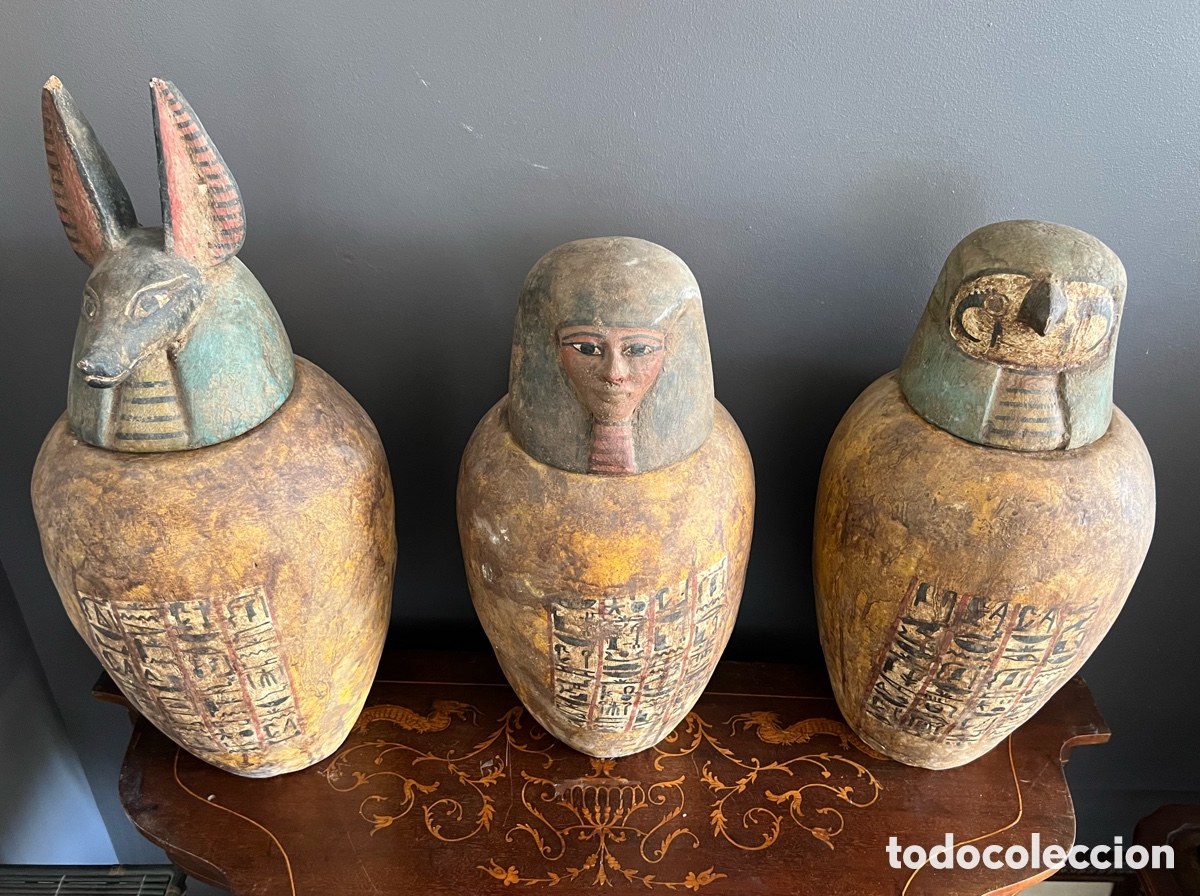
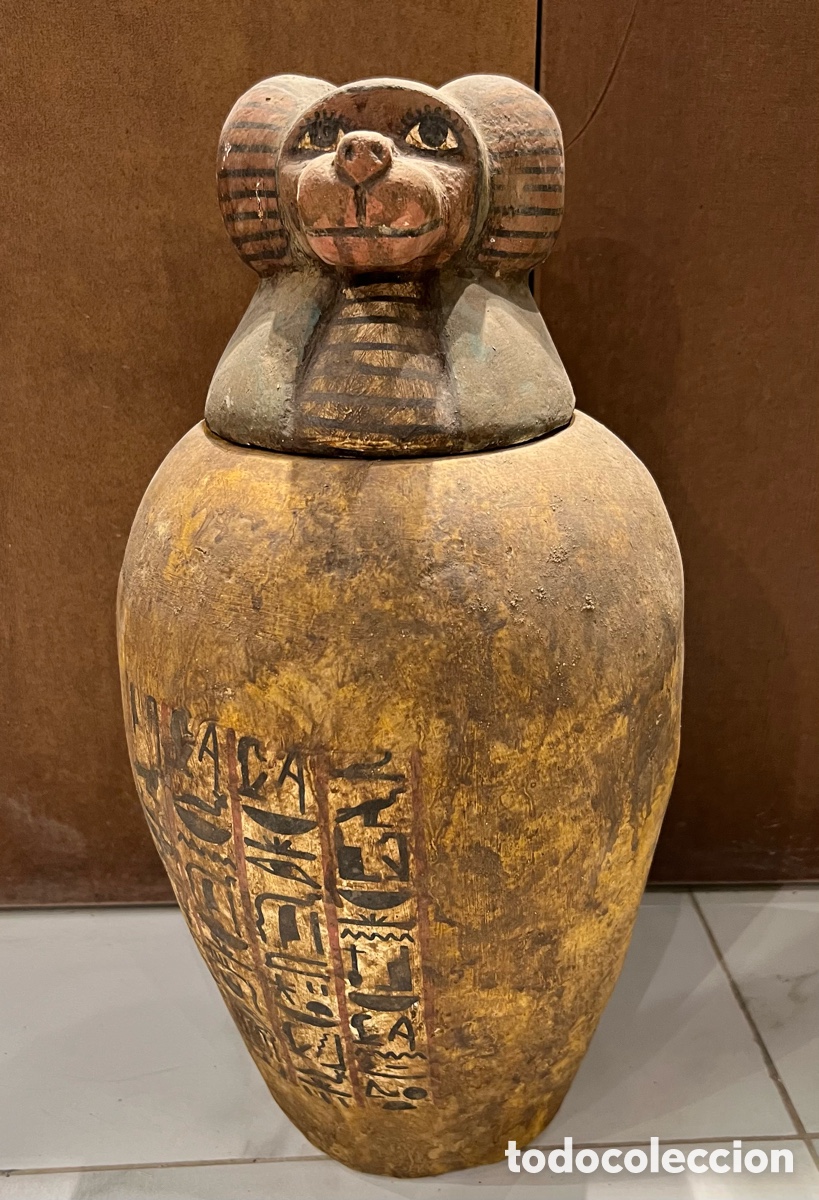
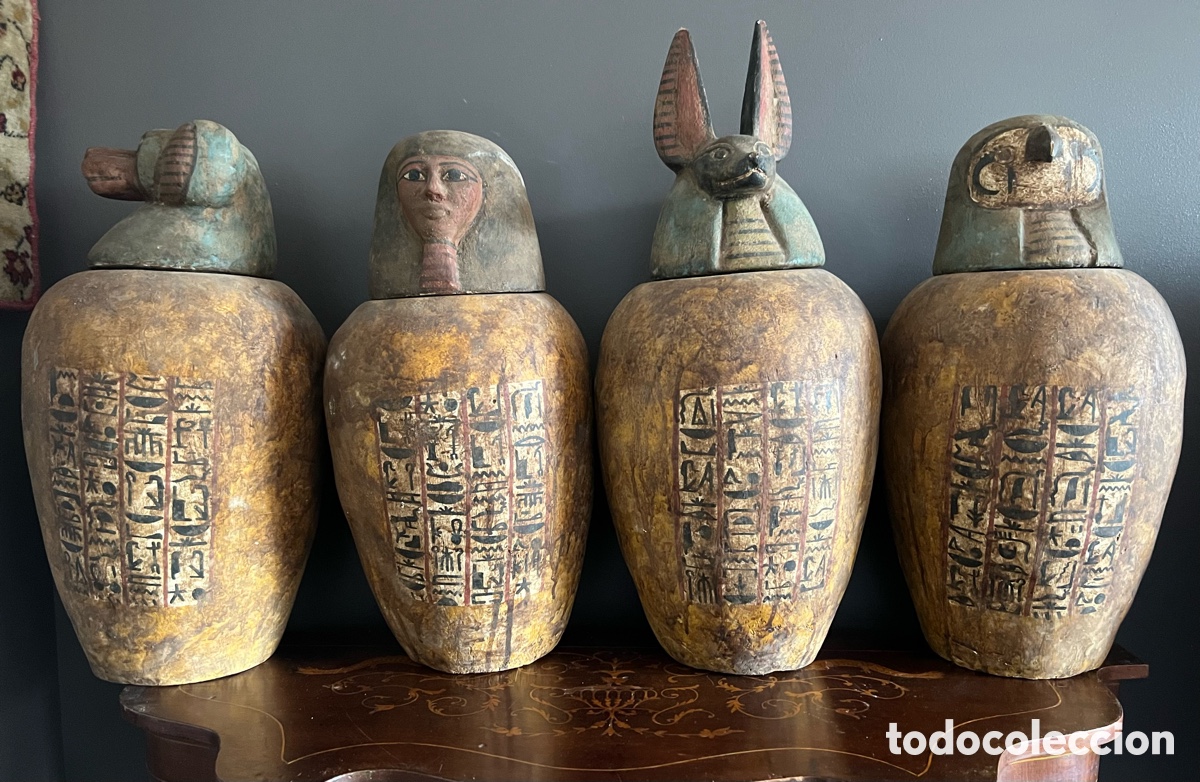
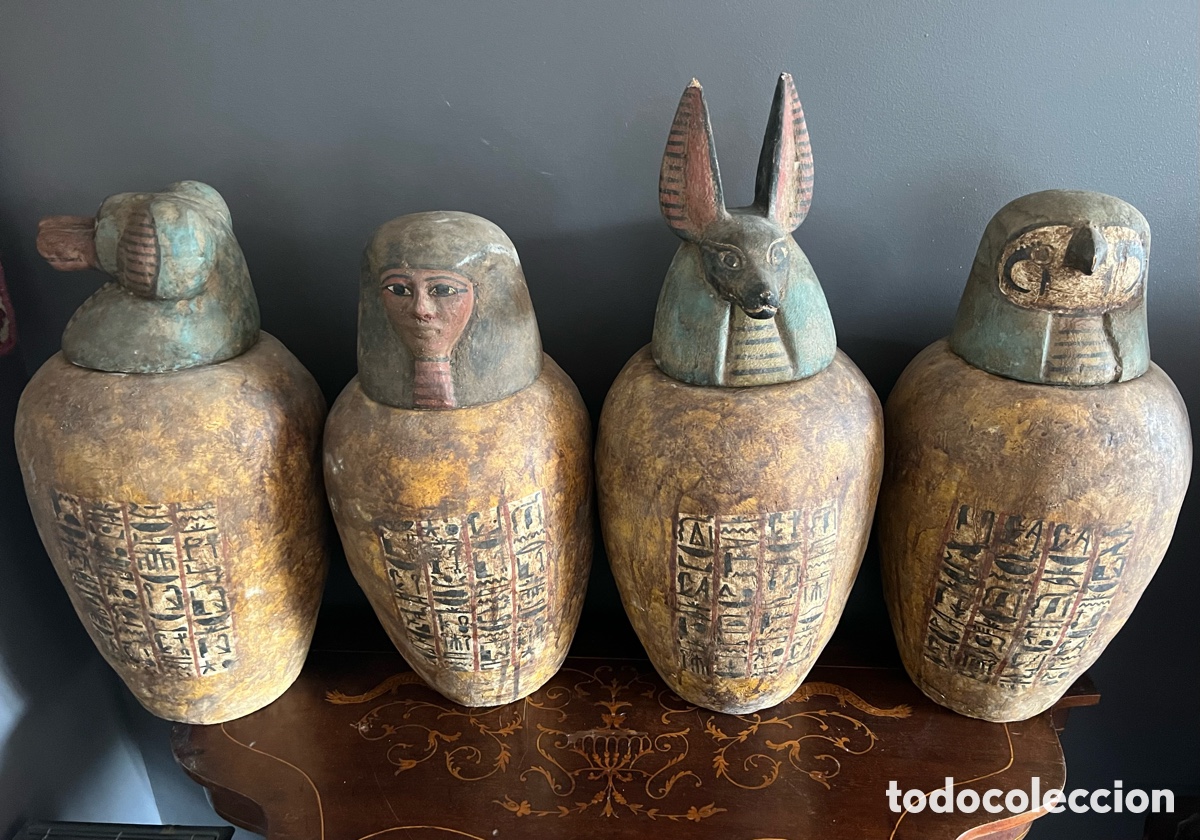
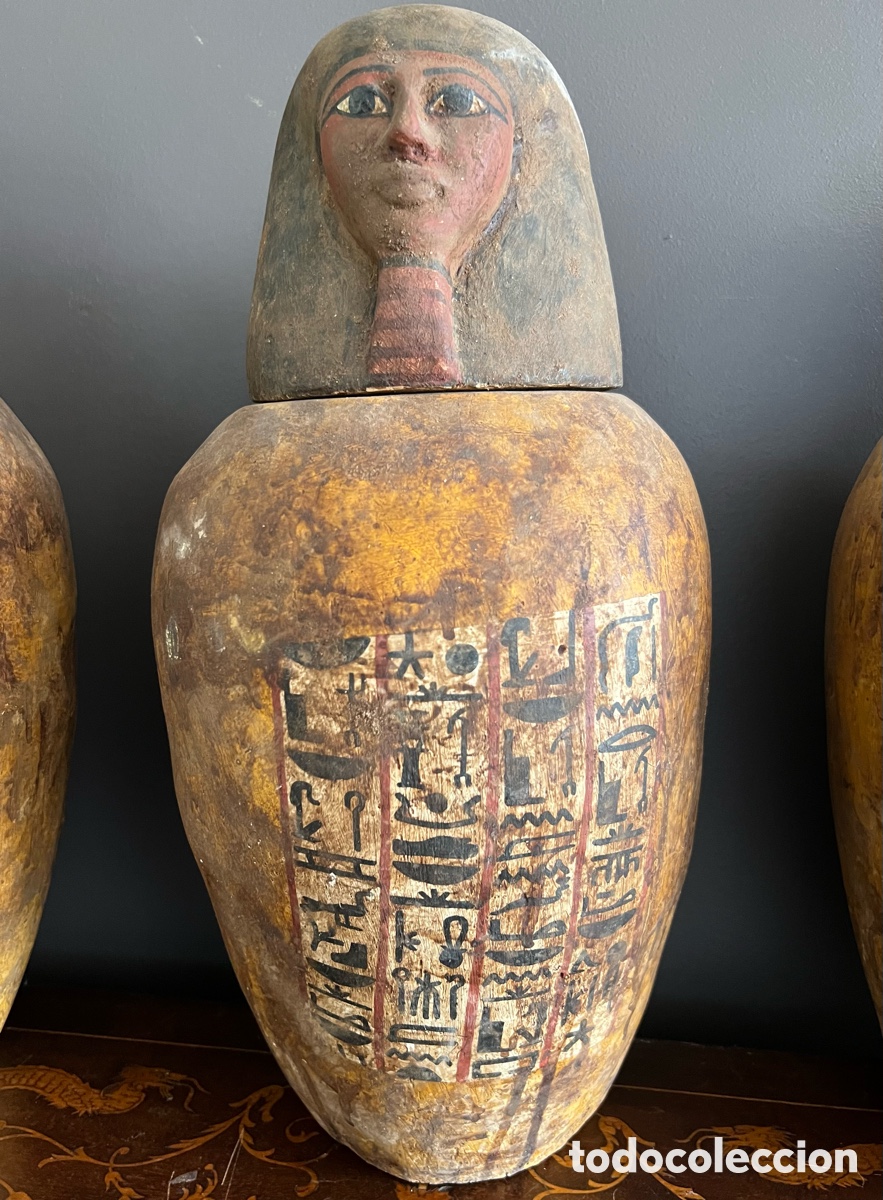
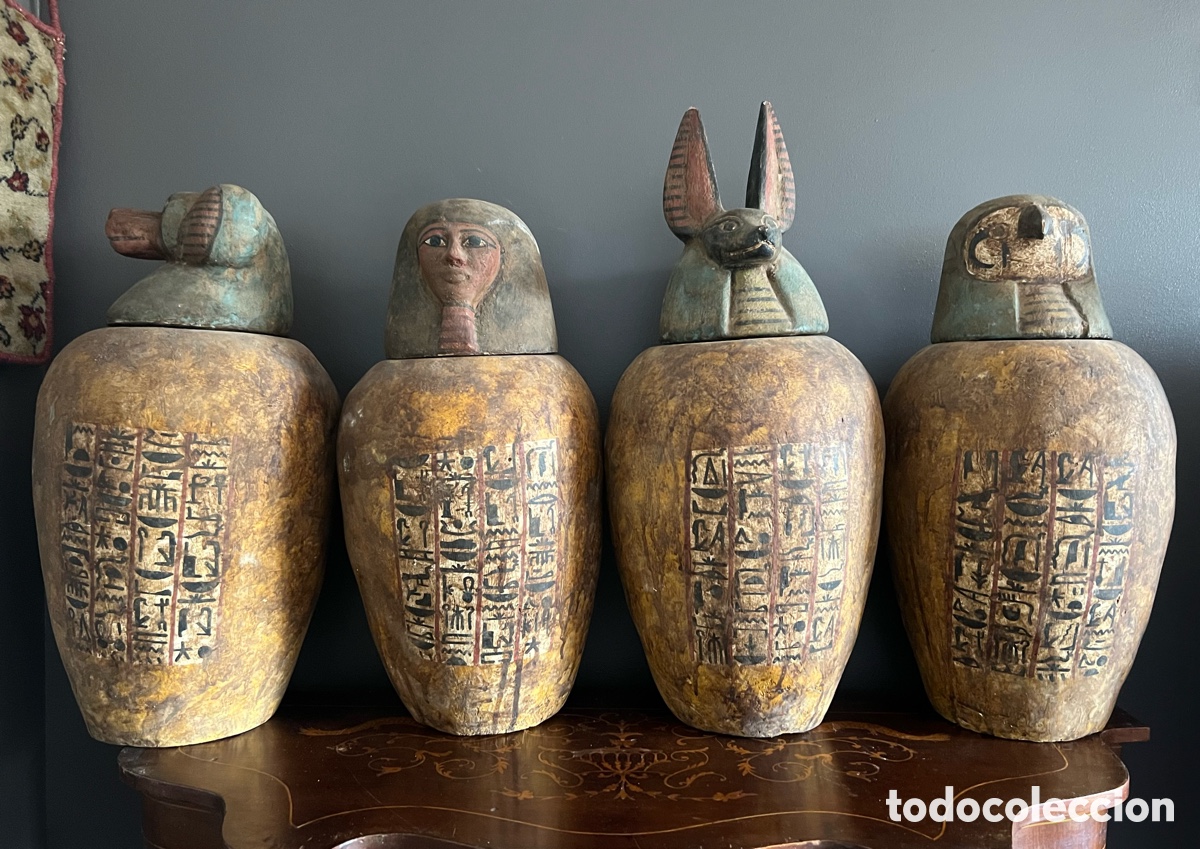
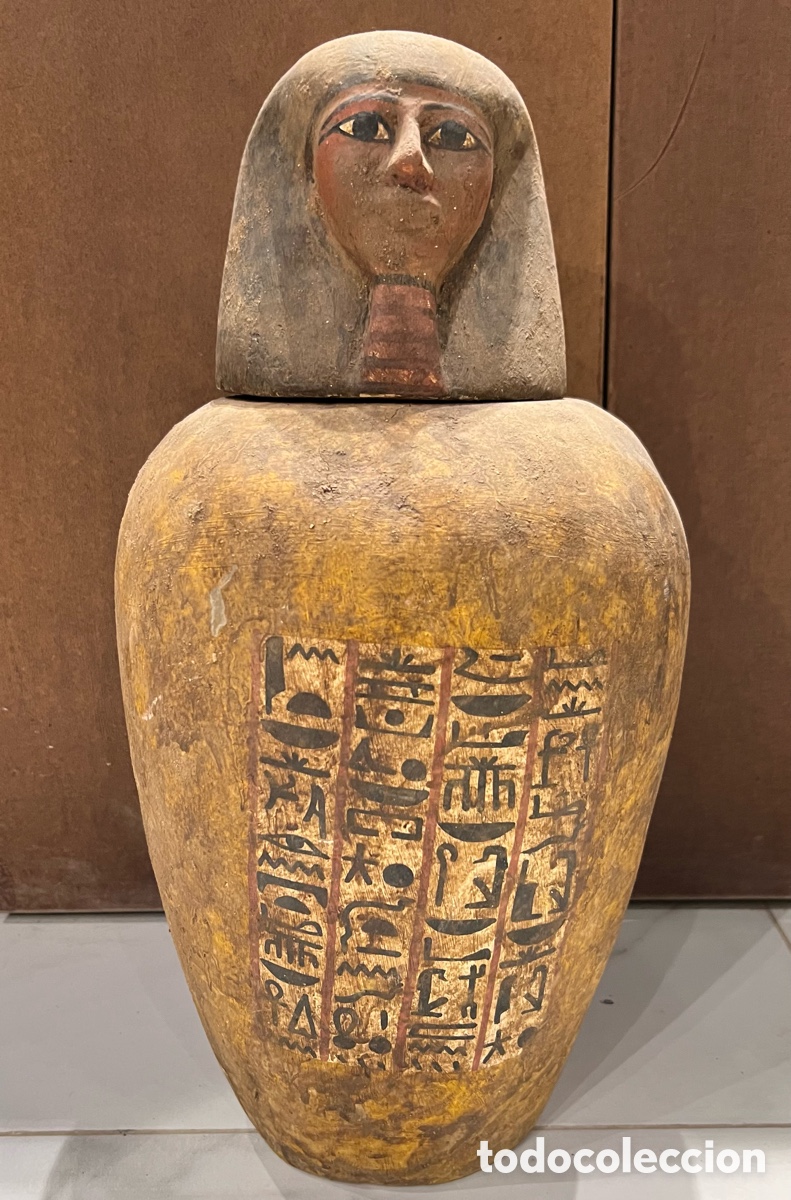
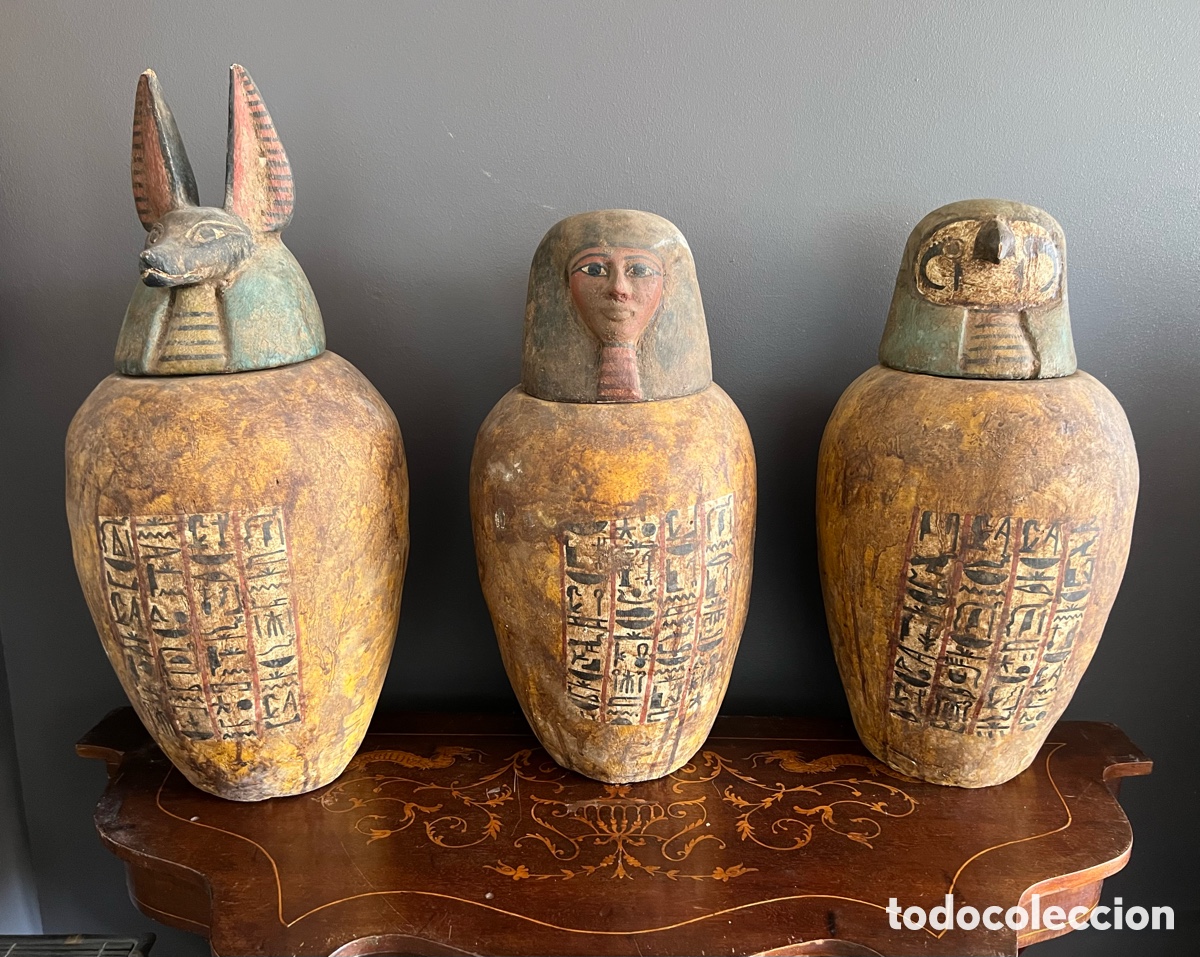
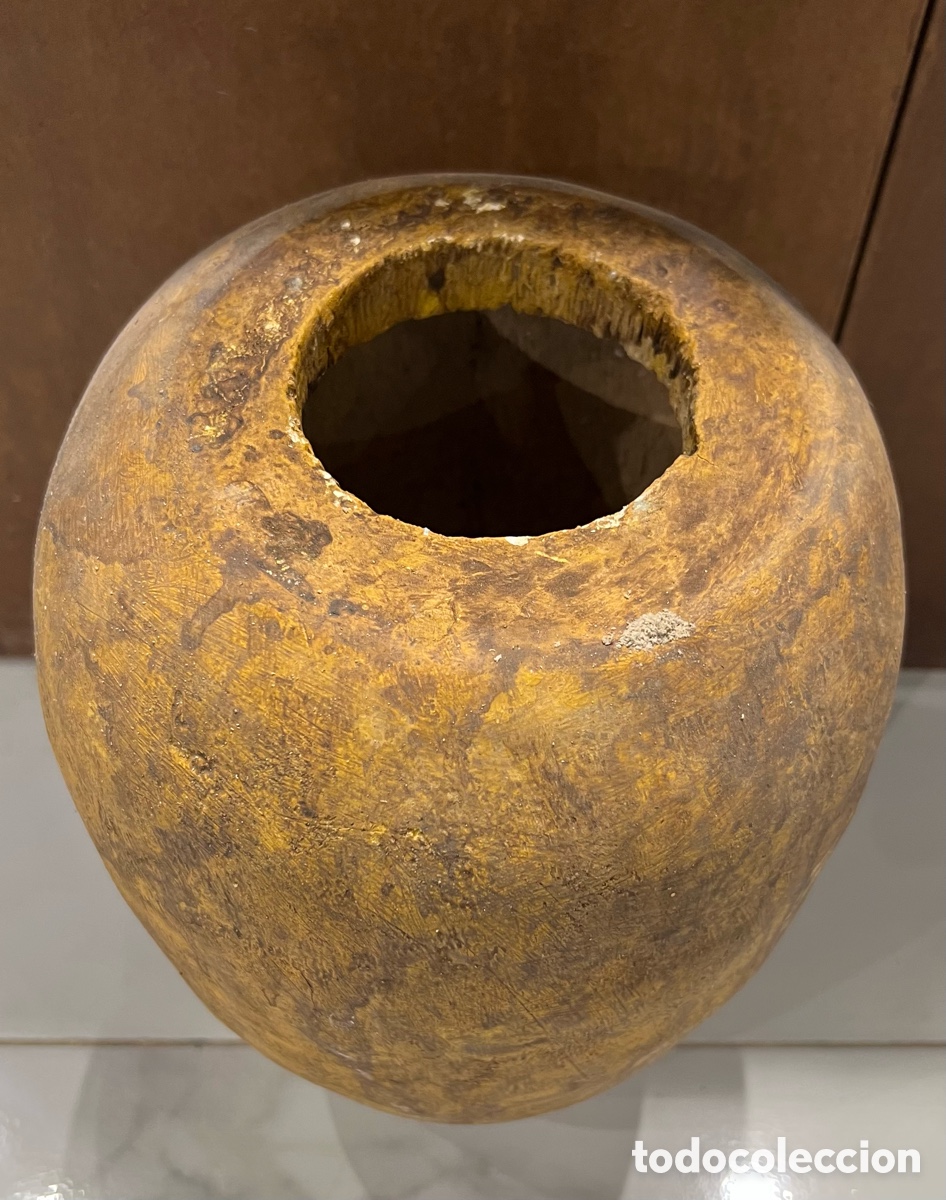
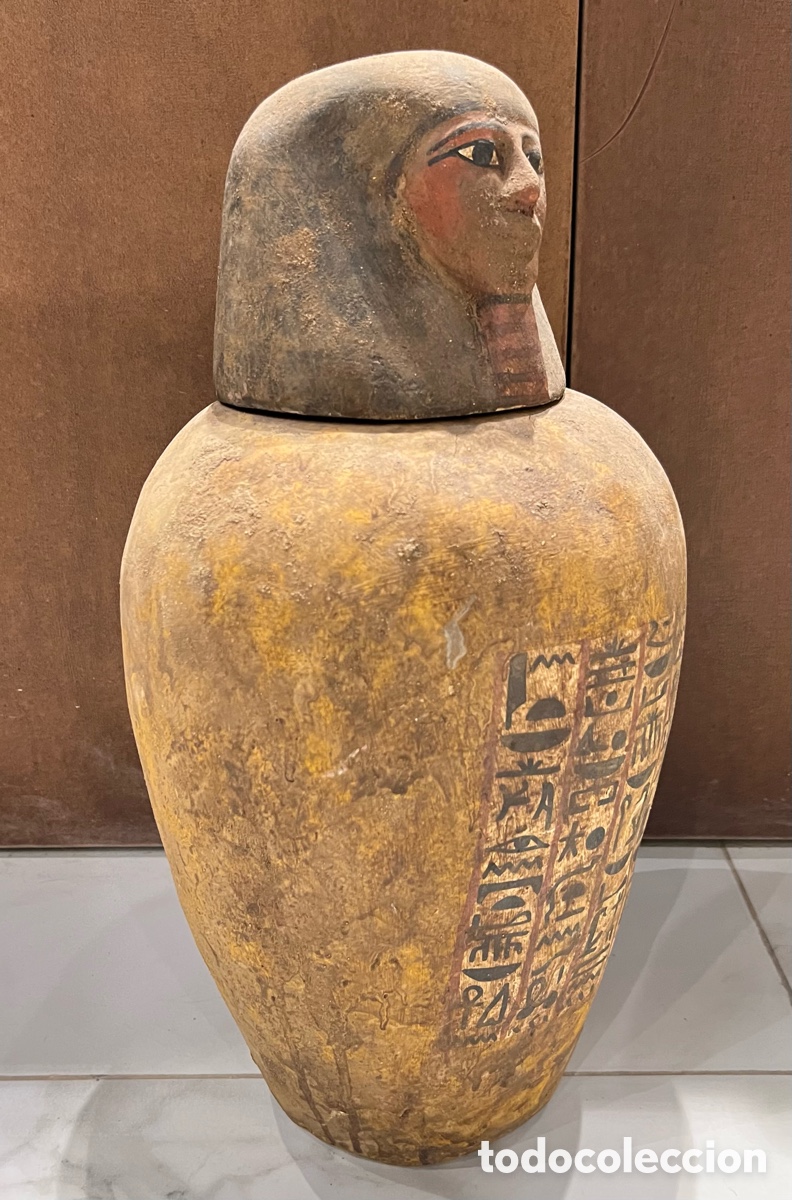
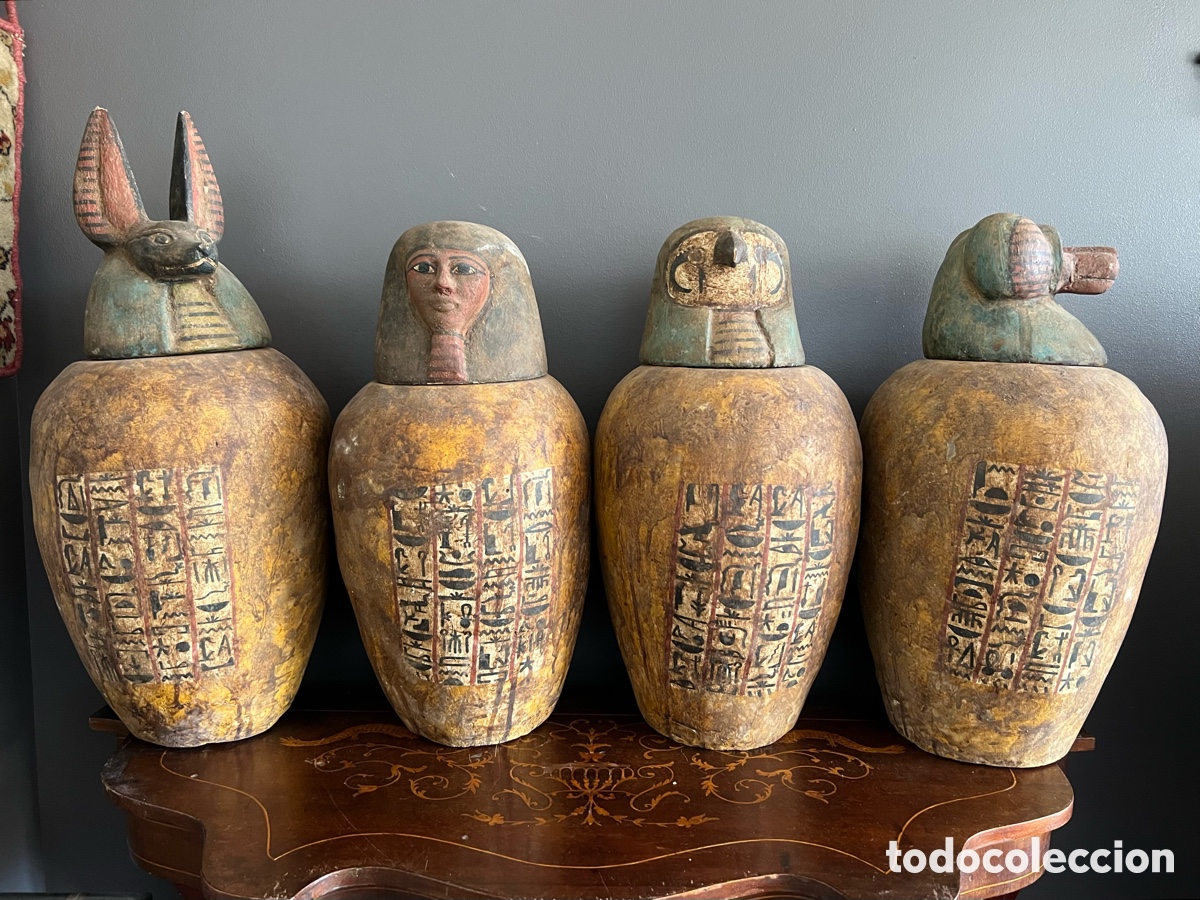
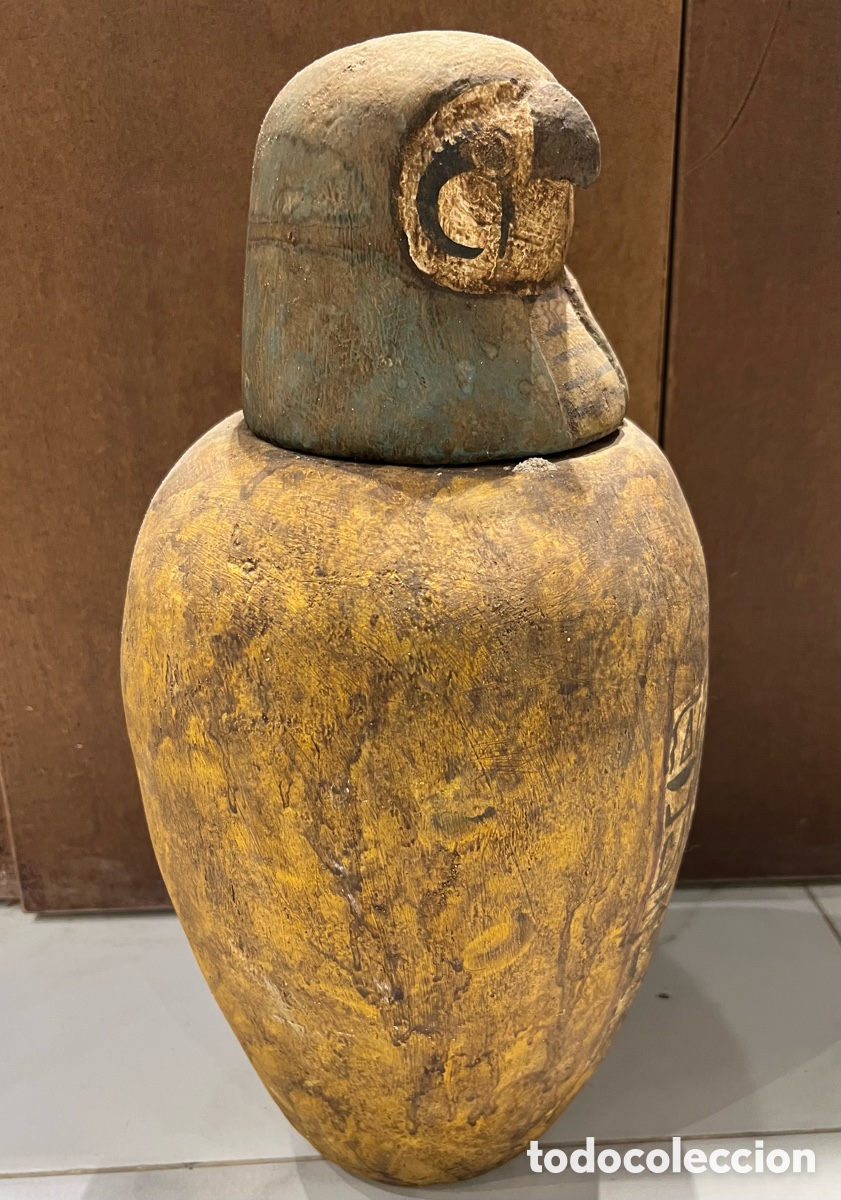
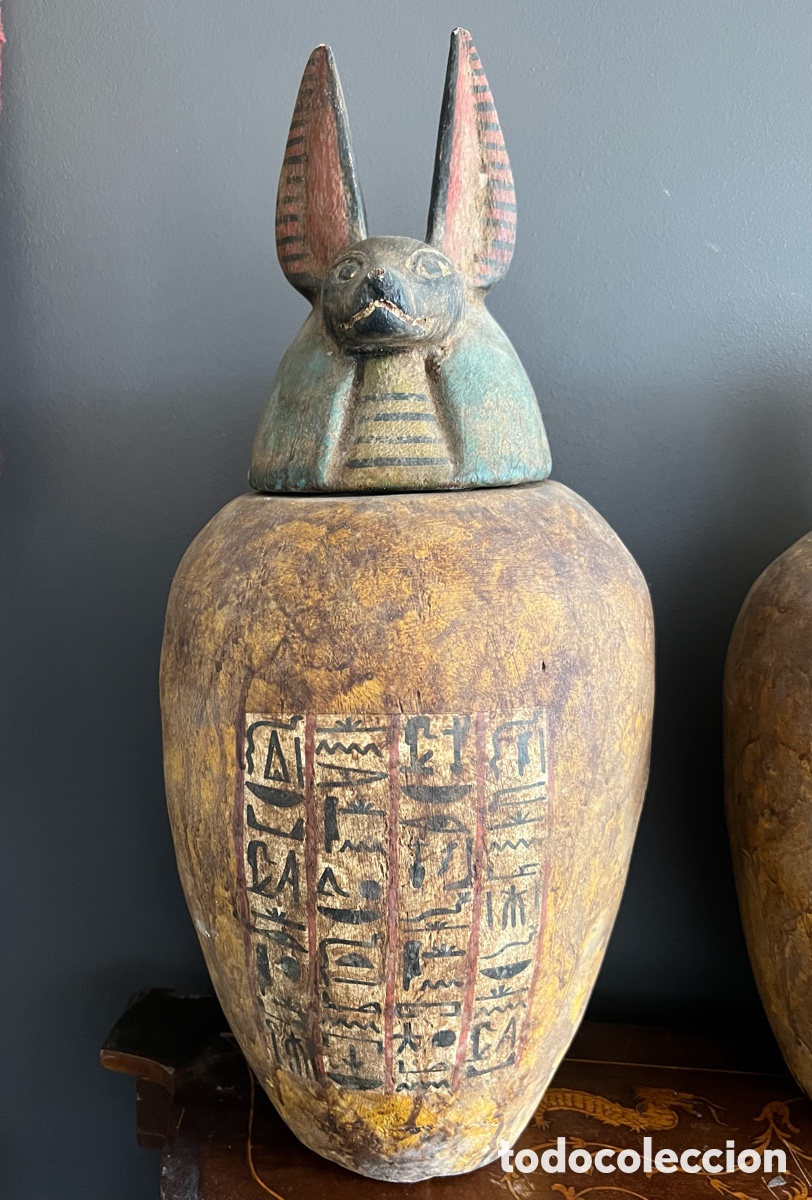
Vasos canopes de madera policromada
Vasos Canopes de madera
Kanopenkasten und Gläser
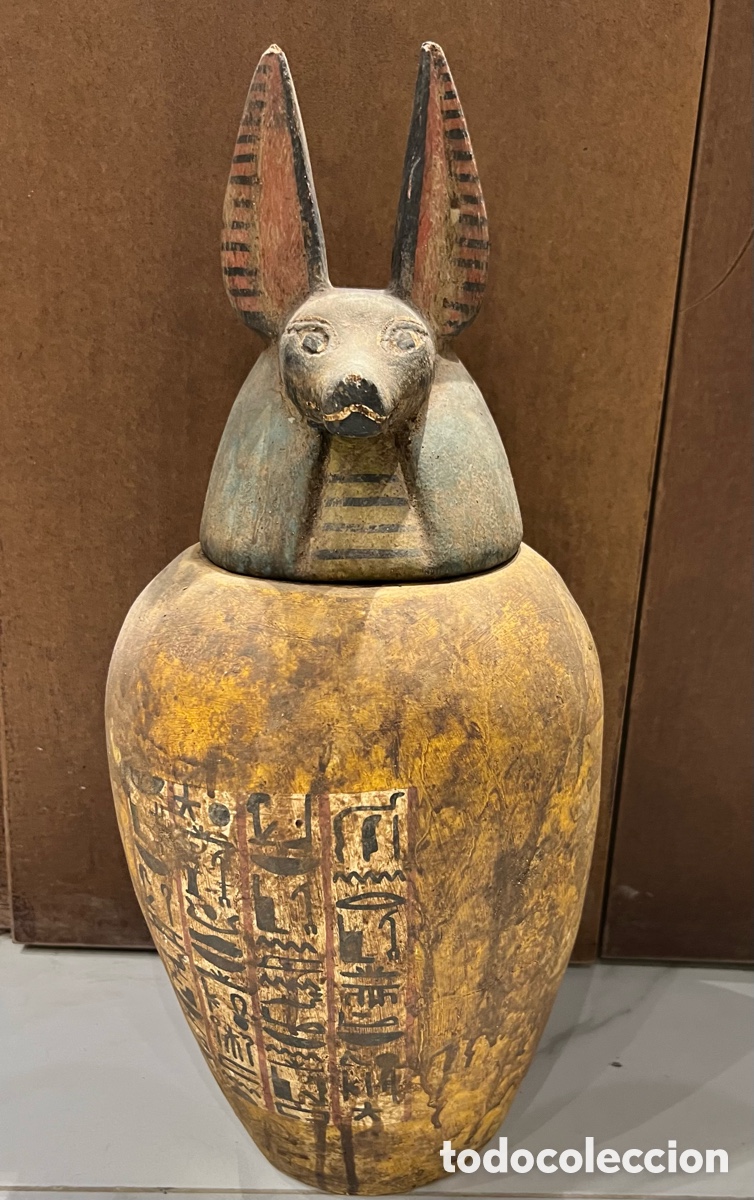
Medium: madera de palma tallada y policromada
Medidas:
50 CM. DE ALTO
25 CM. DIAMETRO
Colección Privada
Los vasos canopes de madera eran recipientes funerarios del Antiguo Egipto, usados para guardar y proteger las vísceras momificadas de los difuntos. Se elaboraban en distintos materiales, entre ellos la madera, y se colocaban en cajas canópicas que acompañaban al cuerpo en la tumba
Durante la momificación, los órganos internos se extraían, se embalsamaban y se guardaban en estos vasos para asegurar la integridad del cuerpo en la otra vida
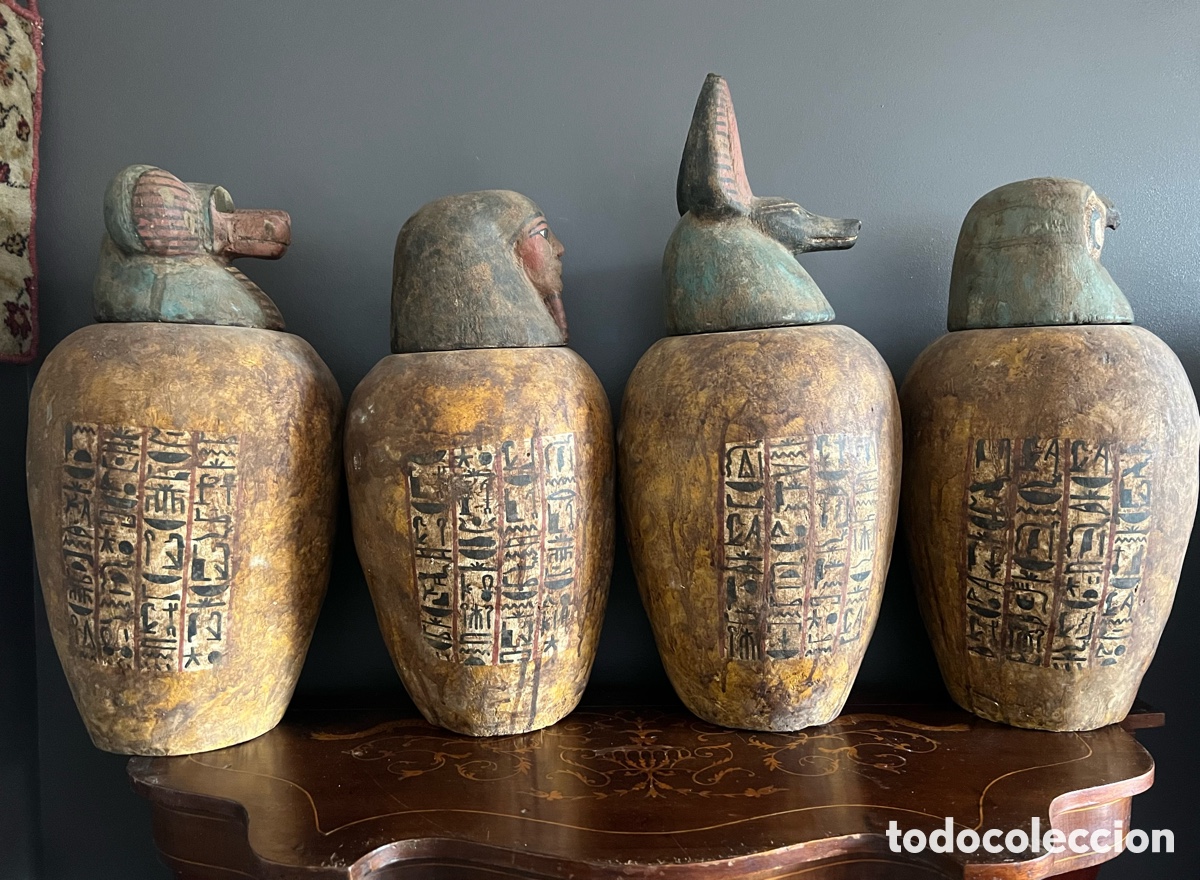
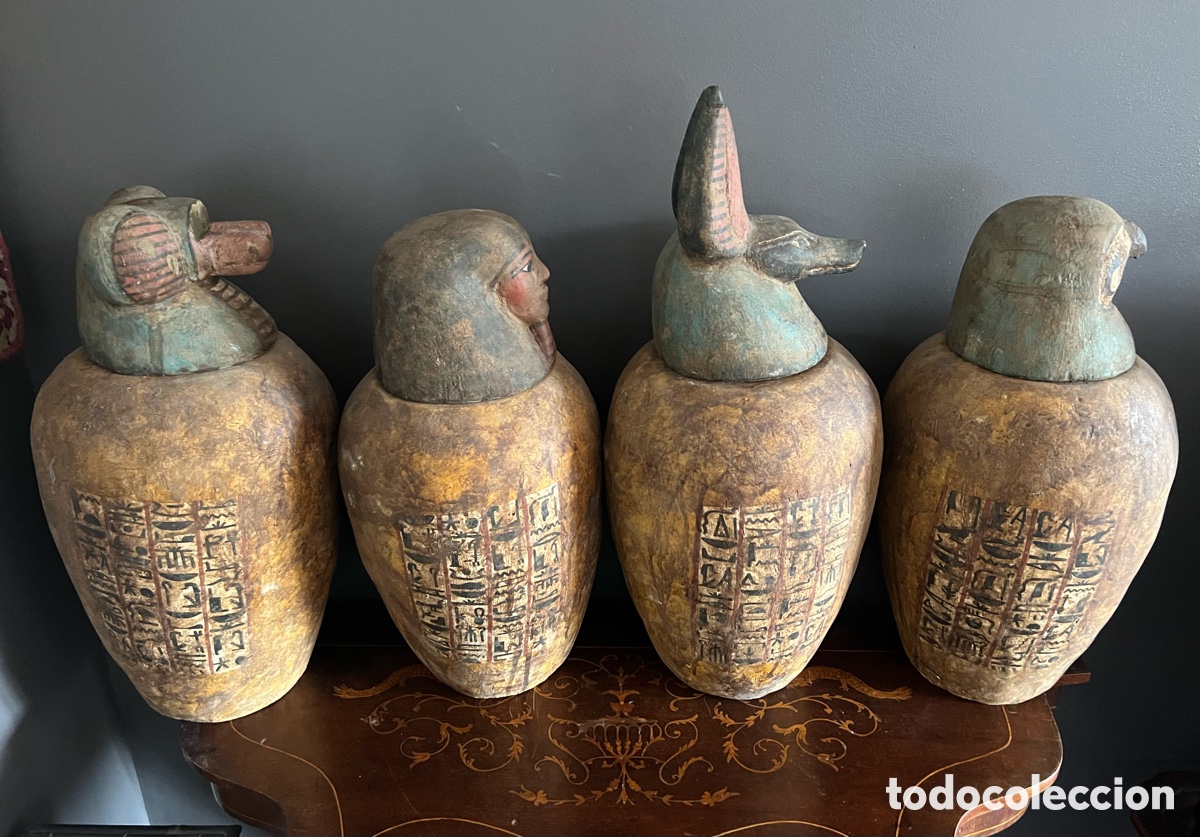
Cada recipiente tenía un nombre. El receptor tiene forma de Babuino y se encarga de proteger los pulmones. El destinatario en forma humana se llama "Amnistía" y es responsable de preservar la alta calidad. El destinatario tiene la forma de una letra "Dawa Mutaf" y es responsable de proteger el estómago. El recipiente en forma de halcón se llama "Qabh Sanawaf" y es el encargado de preservar los intestinos. Finalmente, una unidad de los cuatro vasos canopos representaba una unidad de los cuatro hijos de Horus como guardián de los órganos dentro de los vasos, para que pudieran resucitar en el más allá y en la vida eterna.
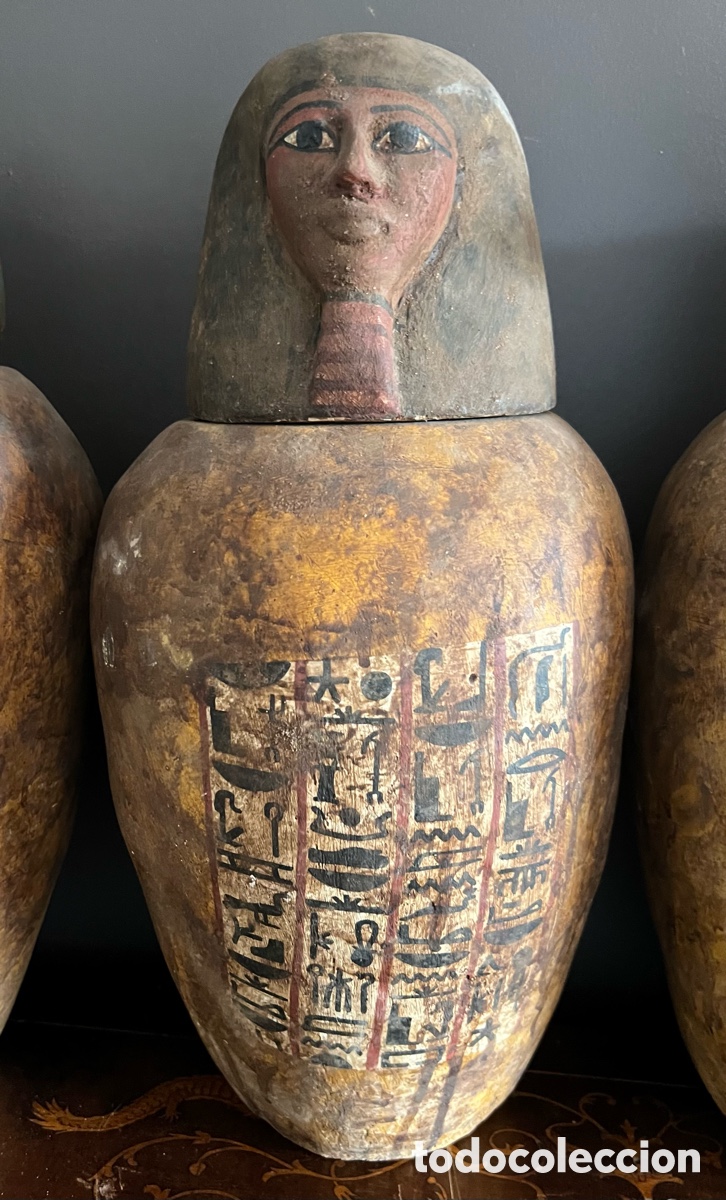
Amset (cabeza humana): Guardaba el hígado.
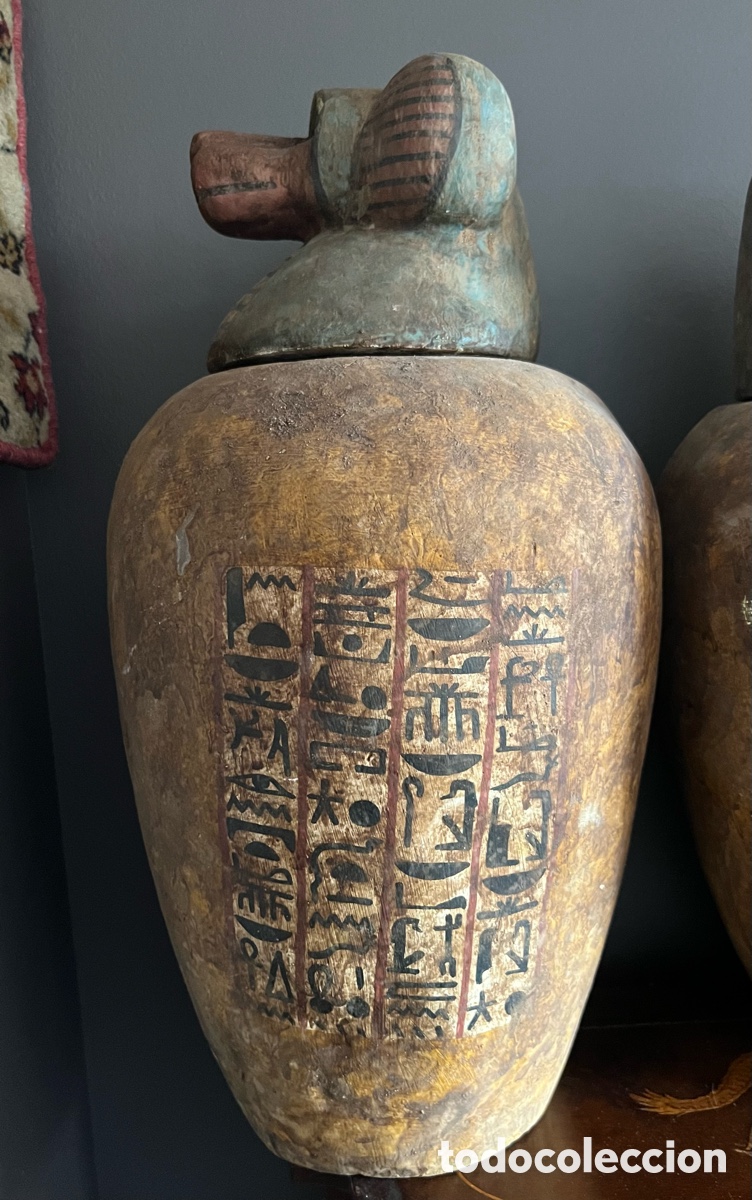
Hapy (cabeza de babuino): Protegía los pulmones.
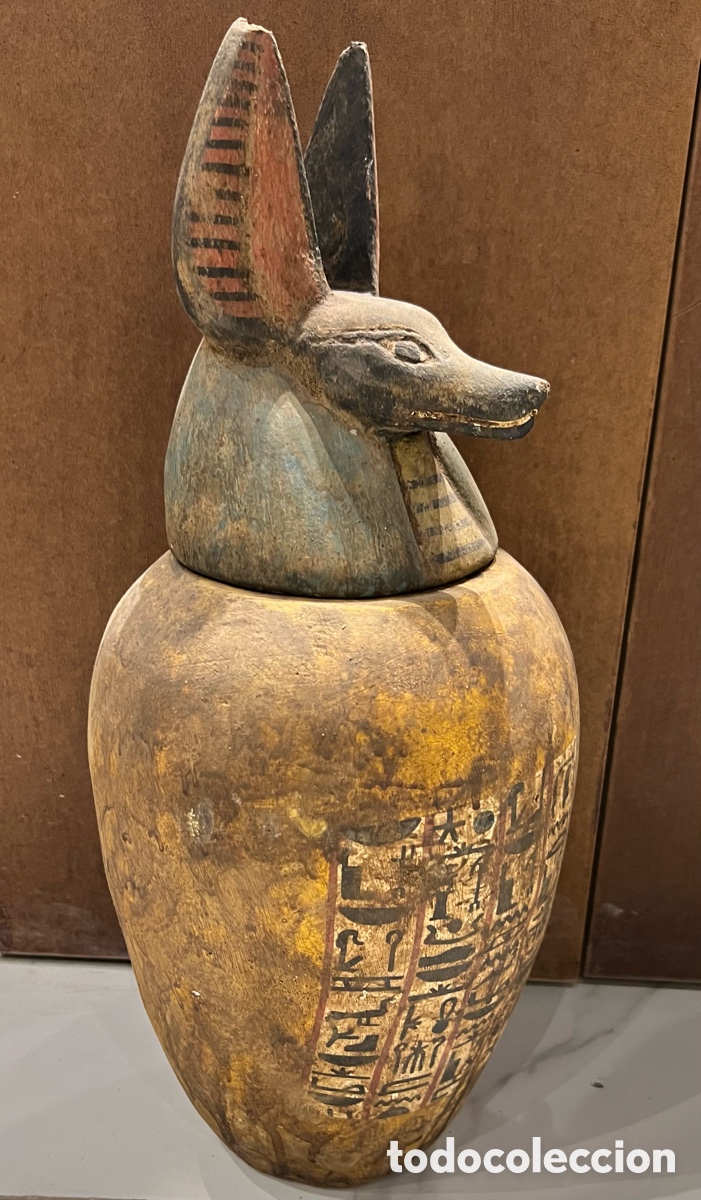
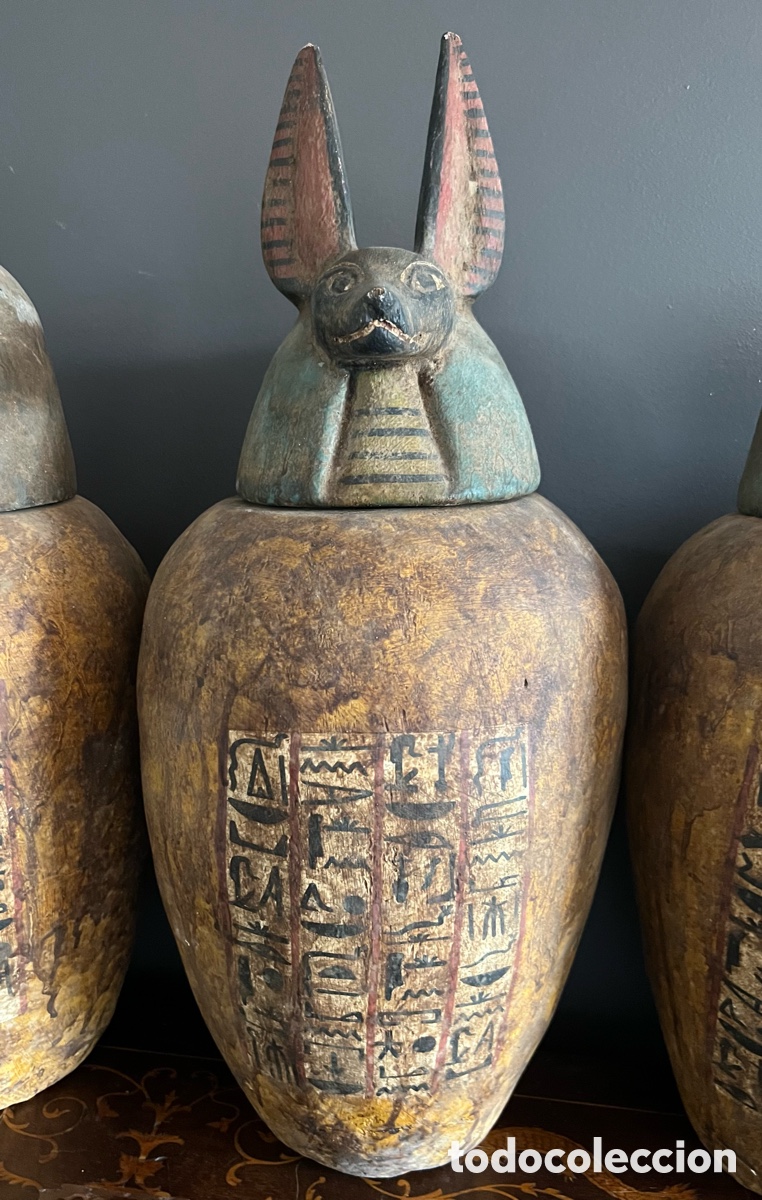
Duamutef (cabeza de chacal): Custodiaba el estómago.
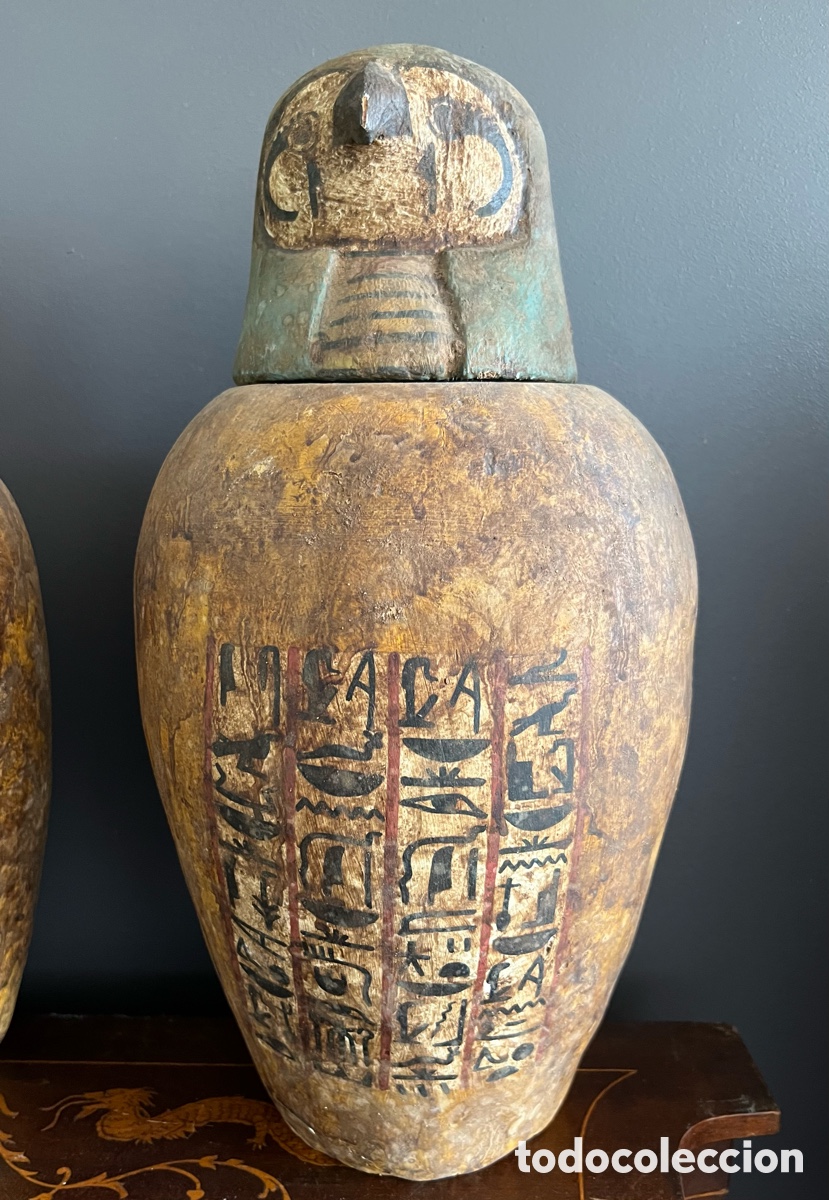
Qebehsenuef (cabeza de halcón): Preservaba los intestinos
Estos dioses aseguraban que los órganos pudieran acompañar
al difunto en la eternidad.
Los egipcios creían que sin los órganos, el difunto no podía resucitar en el más allá.
La presencia de los hijos de Horus garantizaba la seguridad espiritual del difunto.
Los vasos de madera de palma solían estar pintados o recubiertos, mostrando jeroglíficos y escenas rituales.
Wooden Canopic Jars
Canopic Jars and Glasses
Medium: Carved and polychromed palm wood
Measurements:
50 CM HIGH
25 CM DIAMETER
Private Collection
Wooden canopic jars were funerary vessels from Ancient Egypt, used to store and protect the mummified viscera of the deceased. They were made of various materials, including wood, and were placed in canopic boxes that accompanied the body in the tomb.
During mummification, the internal organs were removed, embalmed, and stored in these jars to ensure the integrity of the body in the afterlife.
Each jar had a name. The receiver is shaped like a baboon and is responsible for protecting the lungs. The receiver in human form is called "Amnesty" and is responsible for preserving the high quality of the remains. The receiver is shaped like the letter "Dawa Mutaf" and is responsible for protecting the stomach. The falcon-shaped vessel is called "Qabh Sanawaf" and is responsible for preserving the intestines. Finally, one of the four canopic jars represented one of the four sons of Horus as guardians of the organs within the jars, so that they could be resurrected in the afterlife and into eternal life.
Amset (human head): Guarded the liver.
Hapy (baboon head): Protected the lungs.
Duamutef (jackal head): Guarded the stomach.
Qebehsenuef (falcon head): Preserved the intestines.
These gods ensured that the organs could accompany the deceased into eternity.
The Egyptians believed that without the organs, the deceased could not be resurrected in the afterlife.
The presence of the sons of Horus guaranteed the spiritual security of the deceased. Palm wood vessels were often painted or coated, displaying hieroglyphs and ritual scenes.

Spanien (Málaga)


 Español
 English
 Deutsch
 Français
 Português
 Italiano